

If you’re a B2B founder, tech leader, or growth-minded operator and your marketing feels like a black hole of time, money, and quiet frustration…
This is for you. Because when marketing isn’t working, it doesn’t usually fail loudly. It fails politely.
I’m Holly Mack. I work as a Fractional CMO with scrappy B2B teams. MSPs. SaaS companies. IT service providers. The kind of businesses that don’t need more ideas. They need marketing to actually pull its weight.
Why it’s not working
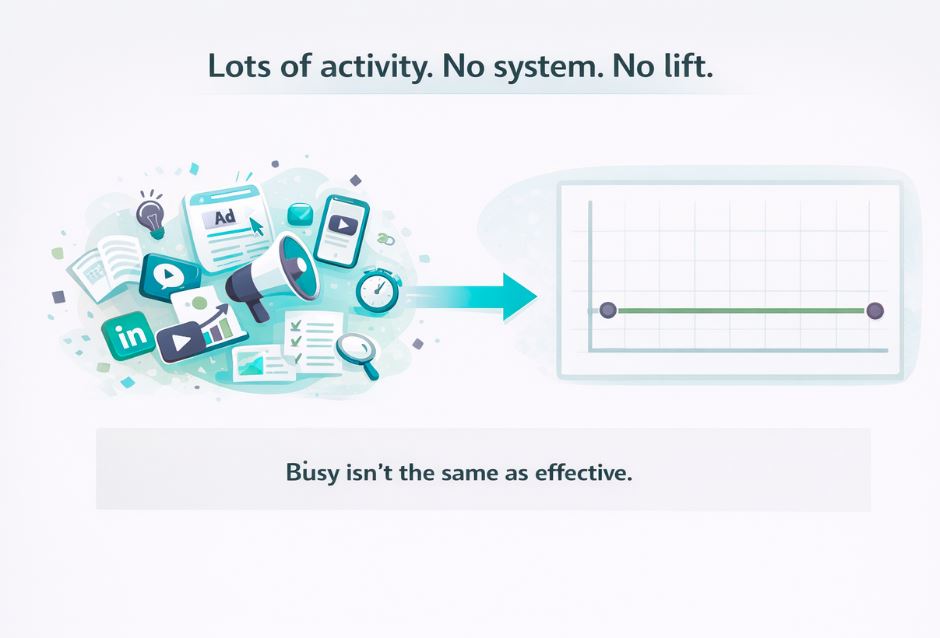
You hired an agency and got a beautiful strategy deck that never made it past kickoff. You downloaded every B2B growth playbook you could find. They’re still sitting in a folder somewhere because no one owns execution. You ran a few campaigns. Tracking is fuzzy. Leads are weak. And when someone asks what’s working, the room goes quiet.
The problem isn’t your product. Or your niche. Or even your team.
What to do instead
This is the system I teach and use. It’s lean. It’s practical. And it’s designed for teams that need results, not theater.
1. Set the foundation up right
Most marketing problems are actually positioning problems. Get brutally clear on four things: who you serve, the urgent and expensive problem you solve, what makes you meaningfully different, and what your actual offer is. A solid marketing plan is usually the first thing that forces this clarity.
2. Start where you already win
Look at your last ten deals. Where did they come from? What do your best clients have in common? Build the system around what’s already working. On purpose.
3. Build a real operating system
You need a shared content calendar, clear ownership, a weekly 30-minute check-in, and a lightweight dashboard with three to five KPIs tied to pipeline, not just impressions. Marketing is a revenue function. Treat it like one. A marketing automation system is what connects all of it into one trackable, repeatable engine.
4. Build a lean content engine
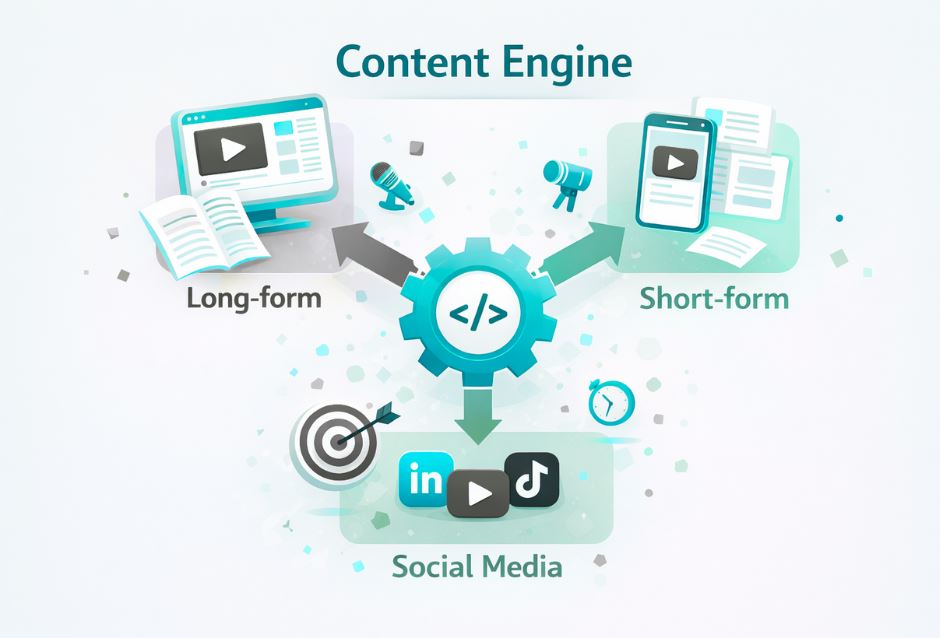
Start with the format you can sustain. Define clear content pillars. Then repurpose. One core idea can become a LinkedIn post, a blog, an email, and a sales follow up. The content workflow for B2B marketing is the system that makes this repeatable without chaos.
5. Get proof because trust converts
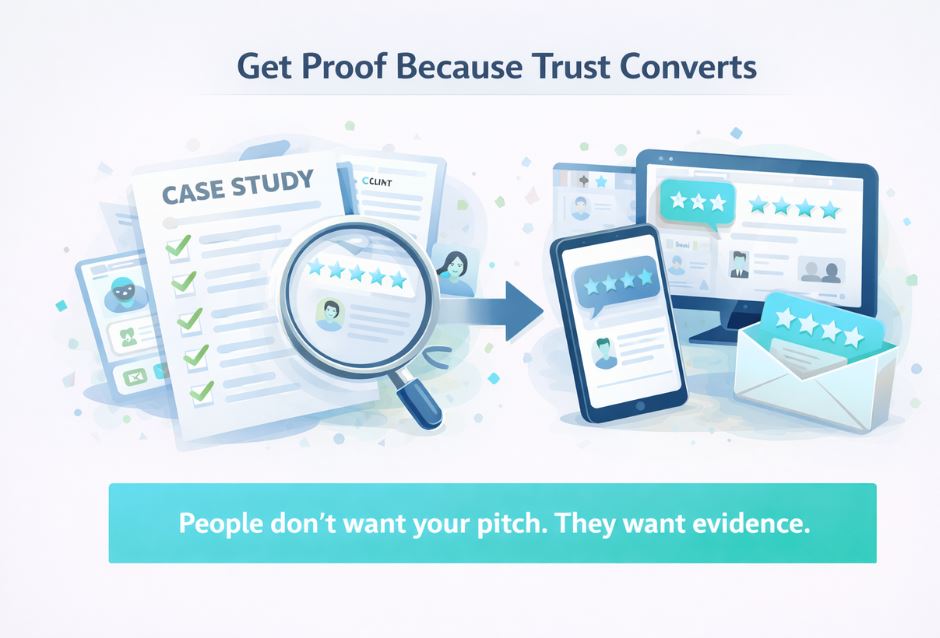
Case studies, testimonials, client screenshots, third-party reviews, and public wins from real customers. People don’t want your pitch. They want evidence. Make trust unavoidable.
6. Do outbound like a human
Good outbound uses intent, goes multi-channel, and personalizes with context not just name tags. Outbound should feel like a conversation. Not a campaign. The best B2B marketing strategies all treat outbound as one layer of a system, not the whole system.
7. Scale without chaos
Delegate execution, hire a doer not another strategist, use AI for leverage not thinking, and document systems so other people can run them. The goal is growth that doesn’t require you to be everywhere all the time. That’s where building an offshore marketing team becomes one of the highest-leverage moves you can make.
Frequently Asked Questions
Why is my B2B marketing not generating leads?
The most common reason B2B marketing doesn’t generate leads is a positioning problem, not a tactics problem. If your messaging is vague, your ICP is undefined, or your offer doesn’t clearly solve an urgent problem, no channel will fix it. Start by getting clear on who you serve, what problem you solve, and why you’re different before running any campaigns.
How do I know if my marketing strategy is working?
Track three to five KPIs tied directly to pipeline — not just impressions or followers. Good leading indicators include qualified conversations booked, pipeline created, and lead source attribution. If you can’t clearly answer what’s generating revenue, your tracking system needs fixing before your tactics do.
How much should a B2B company spend on marketing?
There’s no universal answer, but most B2B companies between $1M and $10M in revenue allocate 5 to 15 percent of revenue to marketing. More important than the budget size is how clearly it’s tied to revenue goals. Wasted spend on the wrong channels or weak positioning is the real problem, not budget size.
Should I hire a marketing agency or build an internal team?
The answer depends on your stage. Specialist agencies work well for specific channels like SEO or paid ads. But generalist agencies often fail because no one owns direction. Before hiring either, make sure you have clear positioning, a defined ICP, and a measurable goal. Without those, neither agencies nor internal hires will deliver consistent results.
What is the fastest way to fix B2B marketing that isn’t working?
The fastest fix is to stop adding and start auditing. Look at your last ten deals, identify where they actually came from, and build your system around that. Then tighten your positioning and offer before touching any channels. Most B2B marketing problems are positioning problems in disguise.
The takeaway
Marketing doesn’t need to be louder. It needs to be built.
If you want help implementing this without guessing, I teach this exact system inside my free 6 Week B2B Growth Sprint.