
Affiliate Disclosure: Note: Some links are affiliate links. I only recommend tools I actually use and genuinely recommend. Never at any extra cost to you.
If your marketing stack feels stitched together… you’re not alone.
Leads come in.
Someone forgets to follow up.
A prospect ghosts.
Sales says the leads weren’t qualified.
Marketing says sales never called.
And somewhere in the middle… revenue leaks.
Most teams try to fix this by adding more tools. Another CRM. Another email platform. Another integration. But more tools rarely solve the problem. They usually make the system more complicated. If you want to understand exactly which tools are causing bloat, see the best CRM for small business breakdown first.
I did the opposite. Instead of stacking tools, I consolidated almost everything into one marketing automation system using GoHighLevel. For most B2B companies and service businesses, it replaces the majority of a traditional marketing stack for $97 per month.
Before we break down the platform, though, we need to talk about the real issue most companies face. It isn’t tools. It’s infrastructure.
Marketing Automation System Explained (Quick Answer)
A marketing automation system is software that connects lead capture, CRM management, automated follow-ups, and pipeline tracking into one integrated platform. Instead of using separate tools for email marketing, landing pages, SMS messaging, chatbots, and analytics, modern marketing automation systems consolidate these functions into one system that manages the entire customer journey.
Most marketing automation systems include lead capture forms and landing pages, CRM contact and deal management, automated email and SMS follow-up, marketing workflows and nurture campaigns, and reporting tied directly to revenue.
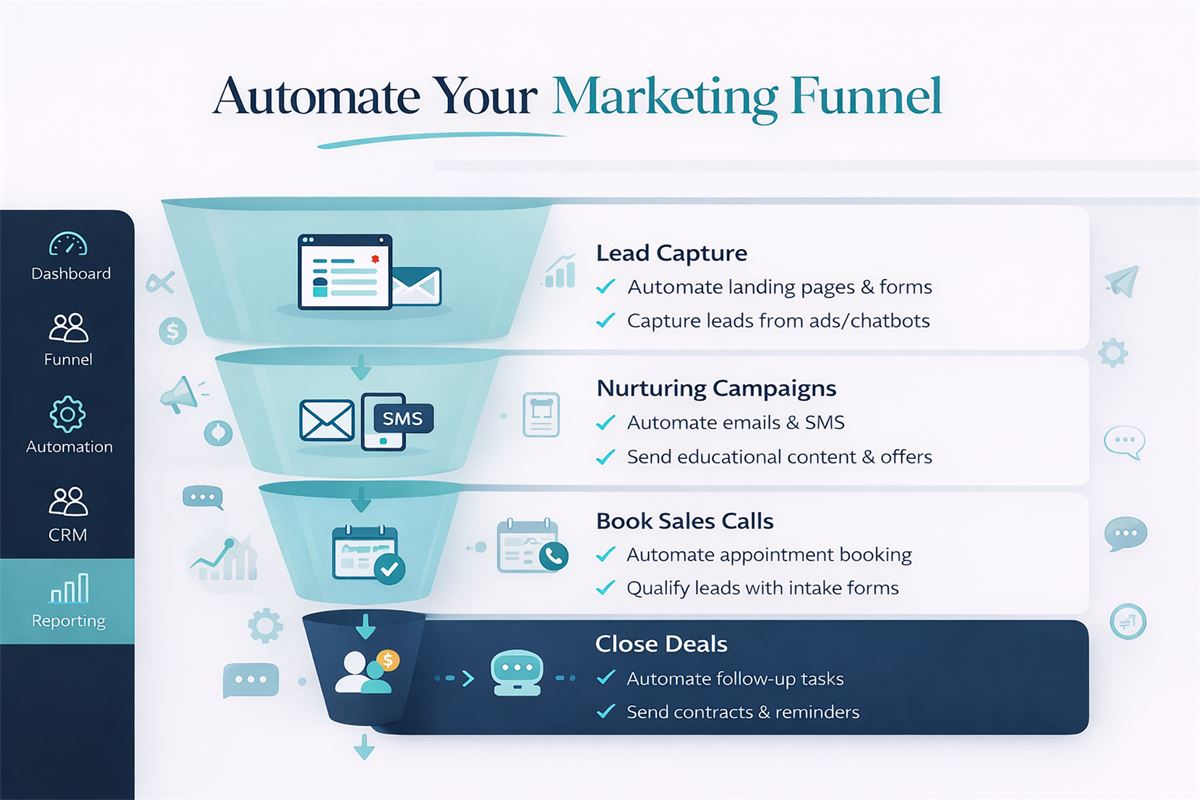
When these components work together, the marketing process becomes predictable: Traffic → Lead Capture → CRM → Automation → Pipeline → Revenue.
What Is a Marketing Automation System?
A marketing automation system is software that connects lead capture, CRM management, automated follow-up, and pipeline tracking into one coordinated platform. Instead of managing separate tools for email marketing, landing pages, SMS messaging, chatbots, and CRM tracking, the system integrates the entire customer journey from first touch to closed deal.
Most systems include lead capture forms and landing pages, CRM contact management, automated email and SMS sequences, pipeline tracking and deal stages, and campaign reporting tied to revenue.
When these components work together, the marketing process becomes predictable: Traffic → Lead Capture → CRM → Automation → Pipeline → Revenue. Most marketing stacks break somewhere in that chain. That’s where revenue leaks.
Why Most Marketing Stacks Feel Broken
If you’ve worked inside a marketing or sales team, you’ve probably seen this. A lead fills out a form. No one follows up for two days. By the time someone calls, the prospect already chose a competitor. Then the blame cycle begins. Sales says the leads were bad. Marketing says sales never called.
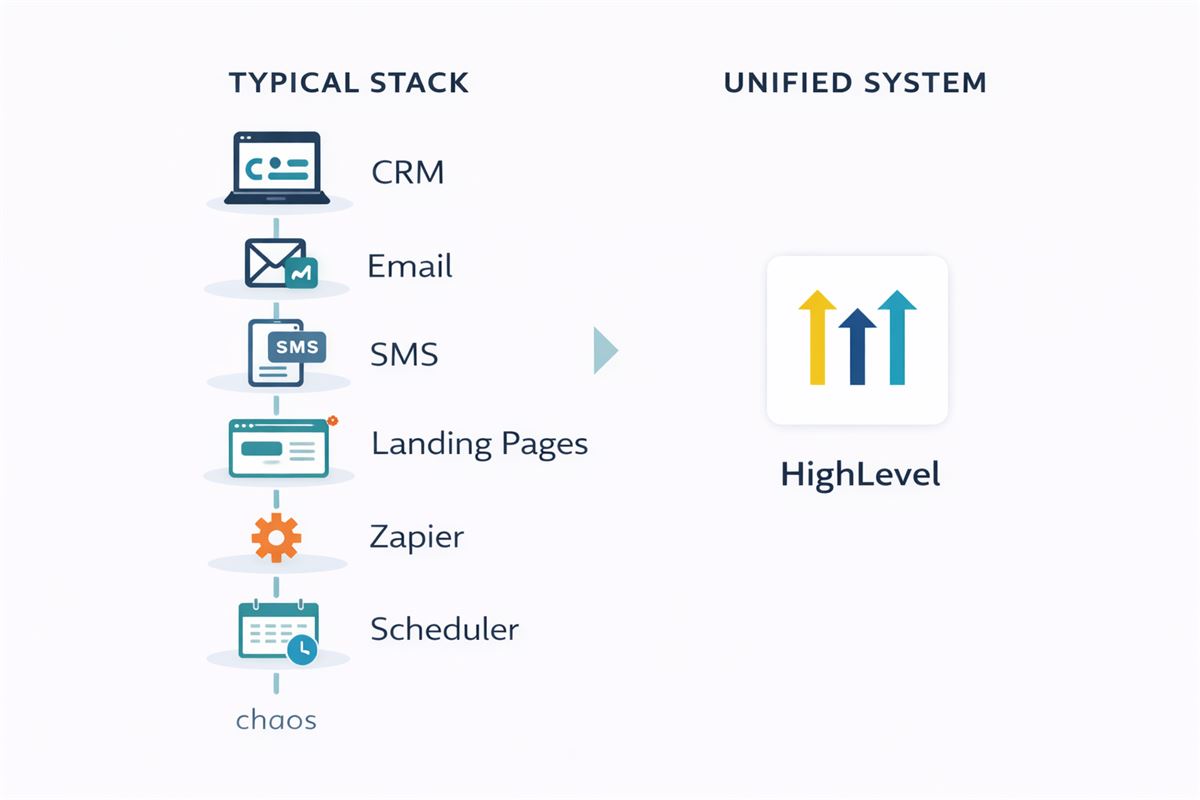
The real problem is usually disconnected tools. A typical stack might include CRM software, email marketing platform, SMS tools, landing page builders, chatbot software, scheduling tools, automation integrations, and analytics dashboards. Each tool works well individually. But they rarely operate as one system. So information gets lost between platforms. And revenue leaks through the cracks.
Why AI Doesn’t Fix Broken Marketing Systems
AI tools are everywhere right now. And yes, I use them daily. They help with drafting email campaigns, generating funnel copy, brainstorming marketing ideas, and accelerating campaign creation. Tools like the best AI video generators are a good example of where AI actually adds real leverage.
But AI layered on top of disconnected systems doesn’t fix the underlying problem. It just makes the mess move faster. Marketing automation only works when four core systems are connected: lead capture, CRM contact records, automated follow-up, and pipeline visibility. Without that infrastructure, automation becomes noise.
The $97 Marketing Automation Platform I Use
The system I use is GoHighLevel. Most people just call it HighLevel. HighLevel functions as both a marketing automation system and a marketing automation platform, combining CRM management, automation workflows, funnels, messaging tools, and reporting into one environment.
Instead of stitching together multiple tools, everything runs inside a single system. For many businesses, that means replacing several marketing subscriptions with one platform. The base plan starts at $97 per month.
CRM and Pipeline Management
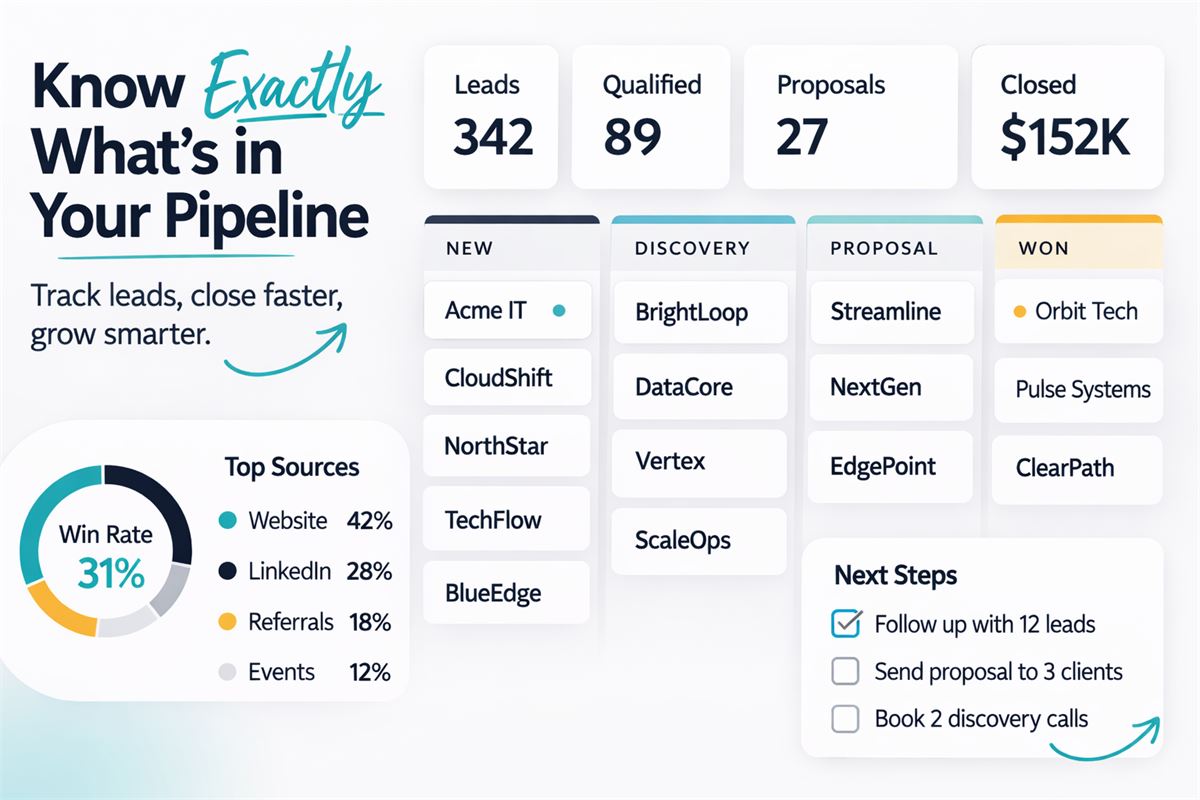
At the center of the platform is the CRM. But unlike many traditional CRMs, the pipeline view is visual and tied directly to marketing activity. Each deal moves through stages defined by your team. Inside every contact record you can see email opens and clicks, SMS conversations, call logs, sales notes, campaign interactions, and pipeline stage updates.
Sales stops relying on memory. Marketing stops guessing what happened after the lead form. Everyone sees the same pipeline.
Marketing Automation Workflows
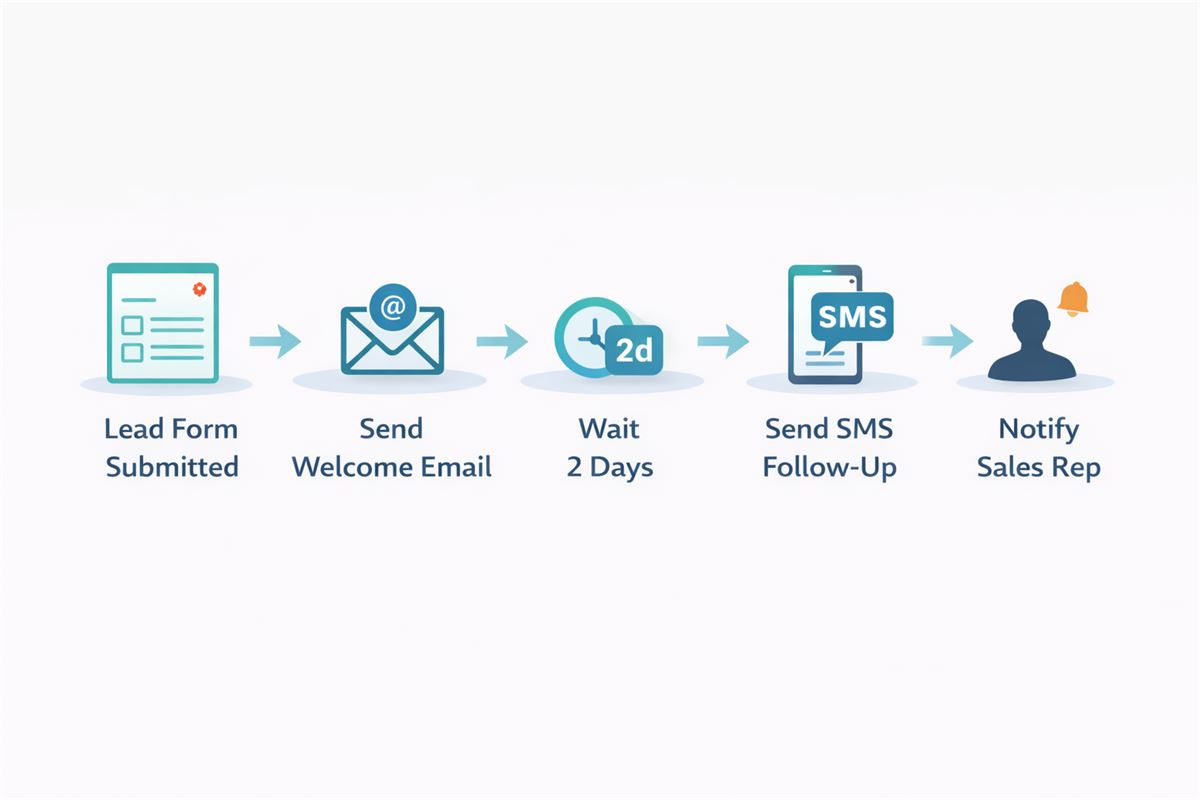
Automation workflows are where the system starts doing the heavy lifting. HighLevel includes a visual workflow builder that allows you to automate multi-step marketing sequences. Common workflows include lead routing to sales reps, email nurture campaigns, SMS follow-ups, internal team notifications, re-engagement campaigns, and appointment reminders.
Example workflow: Lead submits form → CRM contact created → Sales rep notified → SMS follow-up sent → Email nurture sequence begins → Pipeline stage updated. Once built, these workflows run automatically. Follow-up no longer depends on someone remembering to send an email.
Funnels, Forms, and Landing Pages
HighLevel also includes built-in lead capture tools. You can create landing pages, multi-step funnels, embedded website forms, and surveys and quizzes. This infrastructure makes it easy to build an automated marketing funnel that captures leads and moves them directly into nurture sequences.
Automated Marketing Funnel Example
An automated marketing funnel guides prospects from first visit to sales conversation using automation workflows. Example funnel: Traffic visits landing page → Lead fills out form → Contact enters CRM → Welcome email sent automatically → SMS follow-up triggered → Lead books consultation → Deal enters sales pipeline.
Automation ensures every lead moves through the funnel consistently. Instead of relying on manual follow-up, platforms like GoHighLevel run the process automatically.
Built-In AI Tools
HighLevel also includes AI tools to help accelerate campaign creation. These tools assist with email drafts, funnel copy, campaign ideas, workflow suggestions, and conversational responses. This doesn’t replace strategy. But it dramatically speeds up execution.
Chatbots and Website Conversations
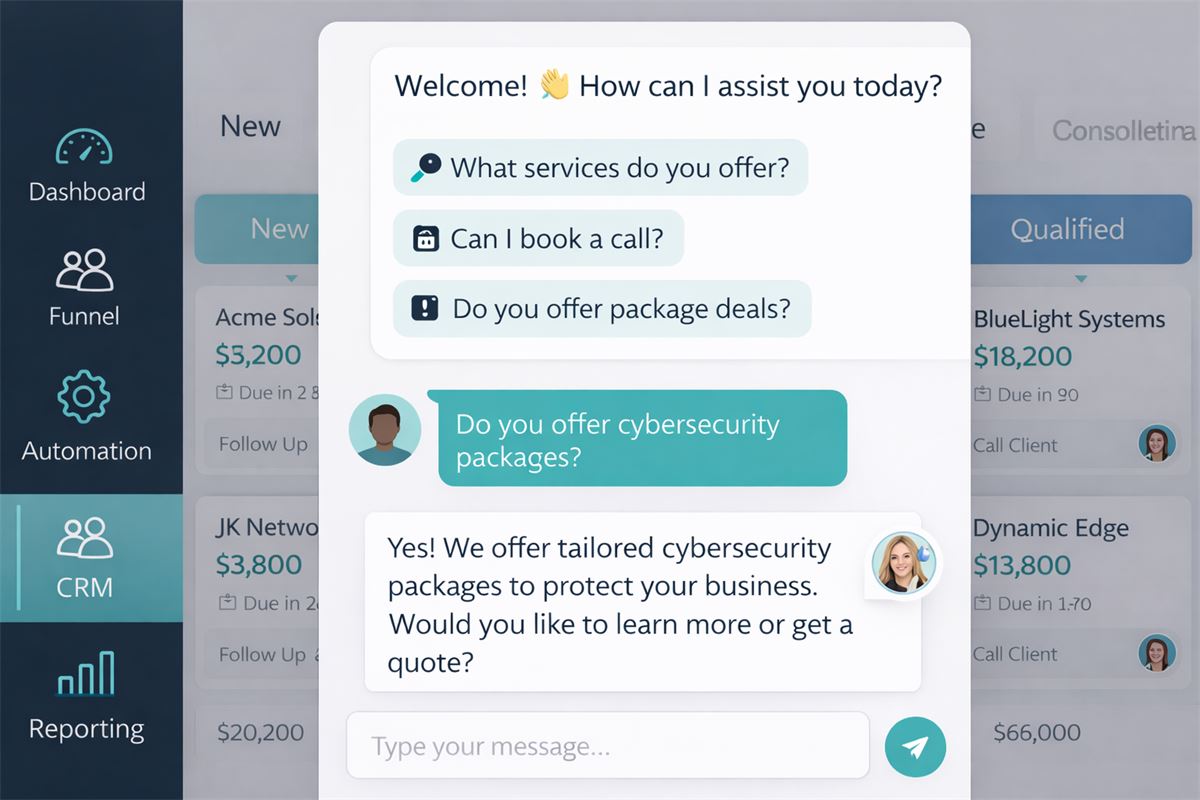
Another feature built into the platform is website chat. You can deploy live chat widgets, automated chatbot flows, lead qualification bots, and appointment booking directly inside chat. Visitors no longer just browse your website. They engage. For service businesses and B2B marketing automation, this turns passive traffic into active pipeline opportunities.
Email, SMS, and Unified Conversations
Communication channels are centralized inside the platform. You can run broadcast email campaigns, automated email drip sequences, SMS follow-ups, and two-way text conversations. All communication appears inside the same contact timeline that sales sees. No more switching between multiple platforms to understand a single deal.
Reporting That Connects Marketing to Revenue
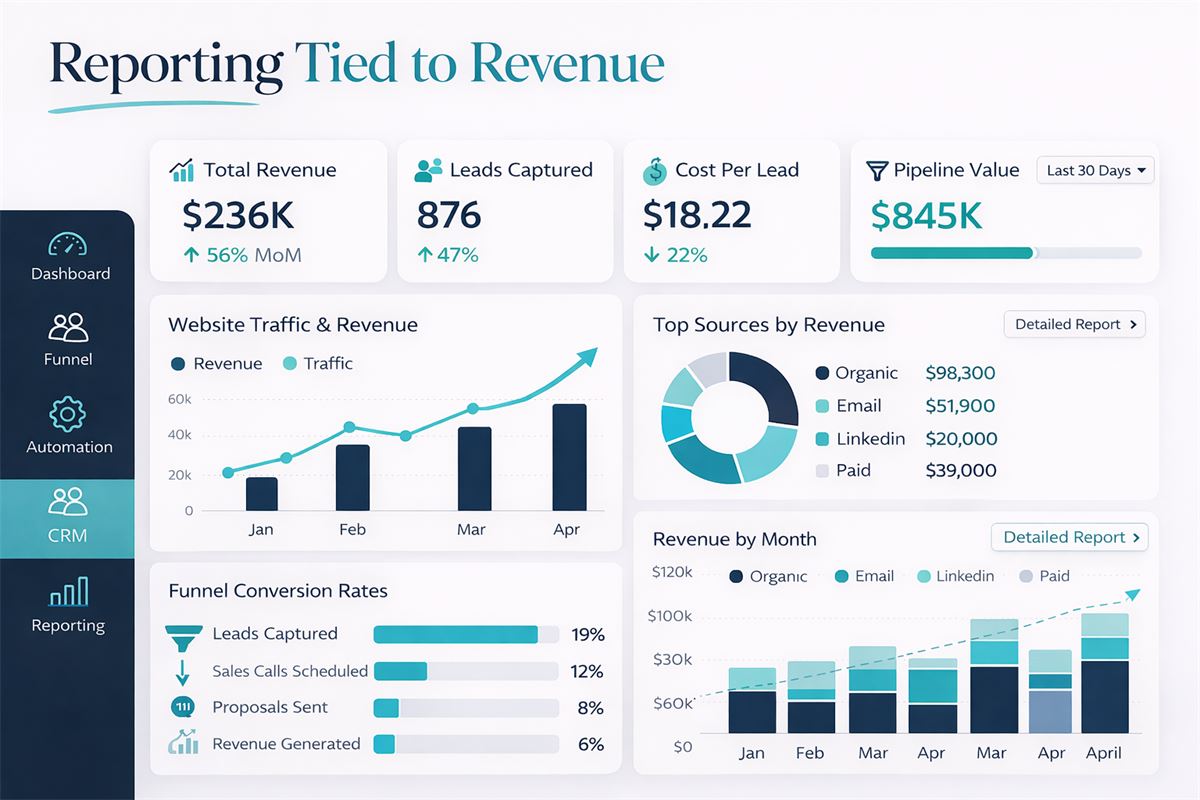
Reporting is where most marketing stacks fall apart. Data lives in multiple tools. At the end of the month someone exports spreadsheets and tries to stitch everything together. Leadership asks the obvious question: “What actually generated revenue?”
HighLevel tracks the entire journey. You can see lead sources, campaign performance, pipeline value, conversion rates, and revenue attribution. Not stitched together later. Actual pipeline visibility.
What This Marketing Automation System Replaces
Most small and mid-sized companies pay separately for multiple marketing tools — CRM software, email marketing platform, SMS messaging tool, landing page builder, scheduling software, chatbot platform, integration tools like Zapier, and social media scheduler. Combined, these subscriptions can easily reach $300 to $1,000+ per month. HighLevel replaces most of this stack for $97 per month.
For a complete look at the full B2B marketing stack — including tools for content, outreach, video, and distribution — see my B2B marketing tools guide.
B2B Marketing Automation
B2B marketing automation focuses on nurturing prospects through longer buying cycles using automated communication and CRM tracking. Because B2B sales cycles can take weeks or months, automation ensures every prospect receives consistent follow-up.
Typical B2B automation includes lead nurturing email sequences, CRM deal stages, appointment booking workflows, sales notifications, and automated follow-up messages. Platforms like GoHighLevel allow B2B teams to manage lead capture, automation, and pipeline visibility in one system. For a deeper look at how the LinkedIn marketing strategy for B2B fits into this system, that guide covers the outbound side in detail.
Who Marketing Automation Systems Are For
Marketing automation systems work best for B2B companies, service businesses, agencies, small to mid-sized teams, and operators who care about pipeline visibility. It’s ideal for companies that want consistent lead follow-up, marketing and sales alignment, automated nurturing, and clear revenue reporting.
What Changes After Implementation
Once the system is implemented correctly, several things shift quickly. Leads are captured automatically. Chatbots qualify website visitors. Follow-up sequences run automatically. Sales sees exactly what marketing is doing. Leadership sees revenue instead of just activity. Marketing stops feeling chaotic. And starts feeling controlled.
Automation Doesn’t Fix Strategy
Automation doesn’t solve weak fundamentals. If your business doesn’t have clear positioning, defined ideal customer profiles, strong offers, and focused messaging — automation won’t fix it. Automation amplifies clarity. It doesn’t create it. If you need a fractional CMO to help build that strategy first, that guide explains exactly when it makes sense.
Want to get the strategy right first? Start with my 6-Week B2B Growth Sprint — it’s the fastest way to build the foundation before you automate anything.
Start Your Free HighLevel Trial (Plus Bonuses)
If you want to see how a real marketing automation system works inside your business, the easiest way is to build one. You can start a free trial of GoHighLevel using my link below. When you join through my link, you’ll also get access to my automation templates and system setup resources.
These bonuses remove the hardest part of automation. Starting from scratch.
👉 Start your free trial of GoHighLevel here
Frequently Asked Questions
What is a marketing automation system?
A marketing automation system is software that connects lead capture, CRM management, automated follow-up, and pipeline tracking into one coordinated platform. It integrates the entire customer journey from first touch to closed deal.
What does GoHighLevel replace?
GoHighLevel replaces most of a traditional marketing stack — including CRM software, email marketing platforms, SMS tools, landing page builders, scheduling software, chatbot platforms, and integration tools like Zapier — for $97 per month.
Is marketing automation only for large companies?
No. Marketing automation systems work best for B2B companies, service businesses, agencies, and small to mid-sized teams. Any business that wants consistent lead follow-up and clear pipeline visibility can benefit — regardless of company size.
Will marketing automation fix my marketing strategy?
No. Automation amplifies clarity — it doesn’t create it. You still need clear positioning, defined ideal customer profiles, strong offers, and focused messaging. Automation executes a strategy; it doesn’t replace one.
How does B2B marketing automation work?
B2B marketing automation nurtures prospects through longer buying cycles using automated email sequences, CRM deal stages, appointment booking workflows, and automated follow-up messages. Platforms like GoHighLevel manage the entire process in one system.