
Last updated: June 13, 2026
The Short Version: SEO still generates nearly half of all B2B revenue. But the playbook changed. AI Overviews, zero-click searches, and content saturation mean the “publish and pray” approach doesn’t work anymore. This is the strategy I run for B2B clients as a fractional CMO. It covers keyword research, content architecture, technical foundations, link building, and AI answer optimization. No theory. Just what I do every week, and the tools that make it work.
A B2B SEO strategy in 2026 combines keyword research, pillar-and-cluster content, technical SEO, and AI answer optimization into one system that drives pipeline, not just traffic.
Organic search generates 44.6% of all B2B revenue, according to BrightEdge data cited by SeoProfy. That makes it the single largest revenue channel for most B2B companies. Not paid. Not email. Not LinkedIn. Organic search.
And yet, most B2B companies I work with are still doing SEO like it’s 2021. Publishing blog posts nobody reads. Chasing keywords that don’t convert. Ignoring technical foundations. Having no idea whether AI systems are recommending them or their competitors.
If you’re building out your B2B marketing strategies for this year, SEO needs to be one of them. But the version of SEO that worked three years ago? That version is collecting dust.
Why Is B2B SEO Different from Everything Else?
B2B SEO targets decision-makers with longer buying cycles, multiple stakeholders, and a conversion that’s a demo or consultation, not a purchase. SEO leads close at a 14.6% rate compared to 1.7% for outbound, according to Oliver Munro’s 2026 B2B statistics roundup.
That’s not a small gap. That’s a completely different game.
The person searching “best CRM for B2B companies” at 2 PM on a Tuesday is rarely the same person who signs the contract six weeks later. But that search starts the process. And if your company doesn’t show up when it starts, you’re not in the consideration set at all.
I wrote about this in my B2B marketing strategies post. SEO isn’t keyword chasing anymore. It’s topical authority. Build around problems, not pages. The goal is becoming the default answer wherever buyers research.
That framing changes everything about how you do keyword research, what content you create, and how you measure success.
How Do You Build a B2B Keyword Strategy That Converts?
Start with your ICP. Not with a keyword tool. The tool comes second.
Before you open Moz Pro or Semrush, you need to know exactly who you’re trying to reach, what problems keep them up at night, and what words they use when they describe those problems. Keyword research built on ICP understanding converts. Keyword research built on search volume alone generates traffic that bounces.
Once you know your buyer, map keywords to three funnel stages:
- Awareness: “what is managed IT services” / “how to improve employee retention” / “B2B marketing strategies”
- Consideration: “best CRM for small B2B companies” / “managed IT pricing” / “fractional CMO vs agency”
- Decision: “[your company] vs [competitor]” / “[your company] reviews” / “[your company] pricing”

Here’s what I see across clients all the time. Everyone creates awareness content. Almost nobody creates comparison and decision content. That’s where the revenue actually lives.
I run keyword research in Moz Pro for most clients. The difficulty scores are reliable, the interface doesn’t overwhelm a lean team, and at $99/month it fits in the budget. When I need competitive gap analysis or search intent classification across thousands of keywords, I bring in Semrush. I covered the full tool comparison in my Semrush vs Ahrefs vs Moz post if you want the details.
The point is, you don’t need to research 2,000 keywords. You need to find the 30-50 that matter for your business and build a system around them.
What Content Should a B2B Company Actually Create?
Not more blog posts. Better architecture.
I use a pillar-and-cluster model for every client. One pillar page covers the broad topic. Cluster pages go deep on subtopics. Everything links together. Google sees depth and authority on a topic, not a scattered collection of unrelated articles.
Here’s how the content types map to the funnel:
| Funnel Stage | Content Type | Purpose | Example |
|---|---|---|---|
| Awareness | Blog posts, guides, educational content | Attract and educate | “What is a fractional CMO?” |
| Consideration | Comparison pages, tool reviews, case studies | Help evaluate | “GoHighLevel vs HubSpot” |
| Decision | Service pages, pricing, testimonials, “vs” pages | Convert | “[Your company] pricing” |
| Retention | Newsletters, resource hubs, client-only content | Keep and expand | Monthly email with new insights |
The biggest mistake I see? Companies that publish 200 blog posts and zero comparison pages. Comparisons are where buyers go right before they decide. If you’re not there, someone else is.
I wrote about this pattern in my marketing strategies guide. Content should be a compounding media system. Value investing, not day trading. One strong piece feeding SEO, social, email, sales conversations, and AI visibility simultaneously. If your content disappears after a week, you’re doing it wrong.
Aim for the “50 pages that matter” before you worry about volume. 10 pillar pages covering your core topics. 30-40 cluster posts going deep on subtopics. 5-10 comparison and BOFU pages targeting buyers who are almost ready. That stack, well-built and well-linked, outperforms 300 thin blog posts every time.
And a functional content workflow is what makes this repeatable instead of heroic.
Does Technical SEO Still Matter in 2026?
Yes. And most B2B companies ignore it until it costs them.
SEO Sherpa’s 2026 data shows 59% of SEO specialists say technical optimization was their most effective strategy. And for every additional second of page load time, conversion rates drop by 4.42%.
Technical SEO isn’t glamorous. Nobody writes LinkedIn posts about fixing their XML sitemap. But it’s the foundation. If search engines can’t crawl your site efficiently, nothing else matters.

The technical checklist for B2B sites is short and non-negotiable:
- Page speed under 2.5 seconds on mobile (check Core Web Vitals)
- Clean site structure with logical URL hierarchy
- XML sitemap submitted and current
- Schema markup on all key pages (Organization, Article, FAQ, LocalBusiness if applicable)
- No crawl errors, broken links, or orphan pages
- Mobile-responsive everything
- SSL certificate (should be obvious in 2026, but I still see sites without it)
Moz Pro’s site audit catches most of these. Semrush’s site audit goes deeper on technical issues and JavaScript rendering. For most B2B companies, running a site audit monthly and fixing the top 10 issues is enough to stay ahead of competitors who never run one at all.
What About AI Overviews and Zero-Click Searches?
This is the part every B2B marketer needs to understand right now. Even if it feels premature for your company.
SEO Sherpa reports that 60% of Google searches now end in zero clicks. First-position organic CTR dropped from 28% to 19% between 2024 and 2025. And GoodFirms’ 2026 survey found 65% of marketers cite AI-driven search changes as their biggest challenge this year.
The numbers are real. But the reaction shouldn’t be panic. It should be adaptation.
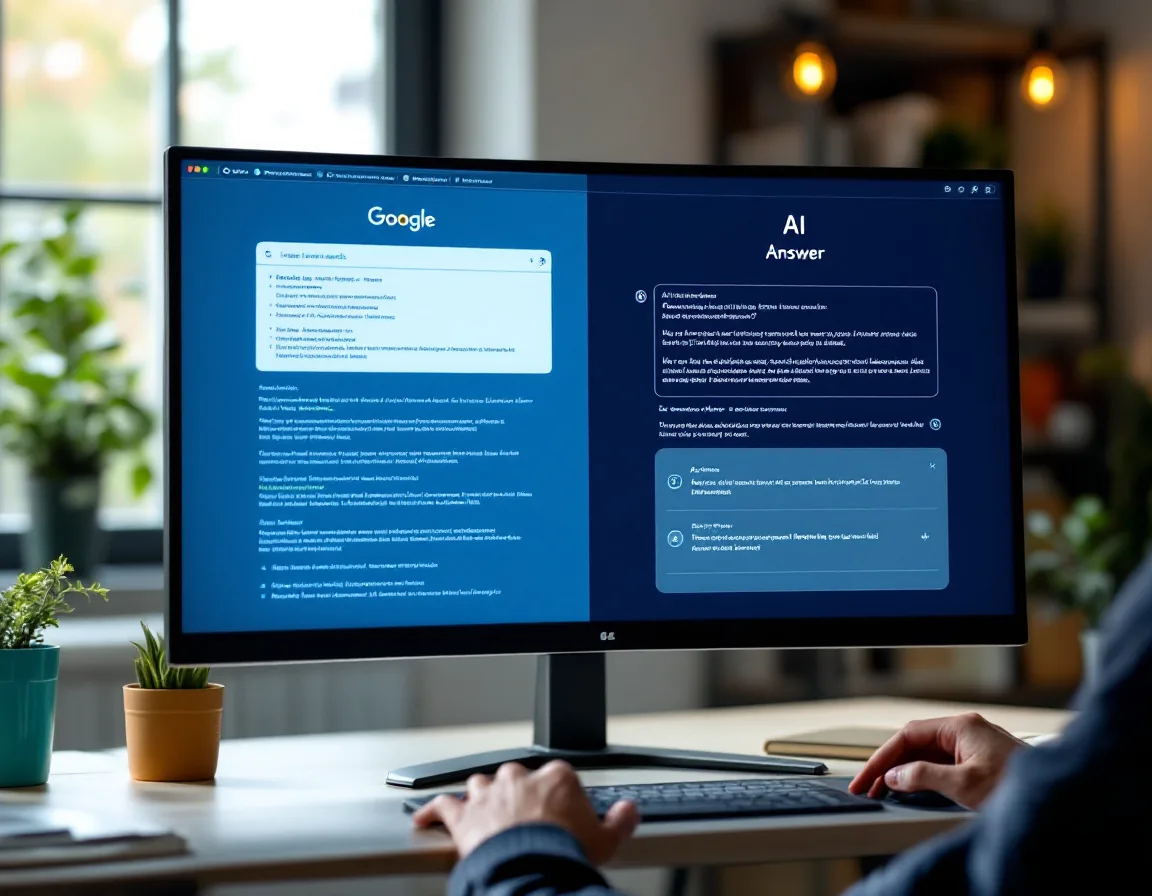
Here’s how I think about it. SEO gets you ranked. AEO (Answer Engine Optimization) gets you cited in AI-generated answers. GEO (Generative Engine Optimization) gets you recommended across AI platforms like ChatGPT, Perplexity, and Gemini. In 2026, you need all three working together.
That doesn’t mean you need three separate strategies. It means you need one strategy built with extraction in mind.
What AI systems extract well:
- Direct answers under 40 words at the start of a section
- Clean comparison tables
- Structured FAQ sections with specific Q&A pairs
- Named entities (real tools, real companies, real numbers)
- Content with expert bylines and clear credentials
What they ignore:
- Generic advice with no specific examples
- Content without named sources or data
- Pages with no structure (wall-of-text paragraphs)
- Anything that reads like it was written by AI for AI
AI made average content free. Which means average content gets buried. The content that gets cited is specific, structured, expert-led, and data-backed. That’s not a new rule. It’s the same rule it’s always been, applied more aggressively.
ABI Research reported a 93% increase in AI referral traffic using AEO tactics. The tactics that worked? Q&A-style content, FAQs, expert bylines, proprietary data, schema markup, and refreshed high-performing pages.
Sound familiar? It’s just good SEO with structure.
Here’s the honest part nobody talks about. Running a real AEO/GEO program on top of your SEO costs money. You’re looking at $5K/month minimum to do it right. Below that, you just don’t get enough publishing volume or analyst hours to move the needle. For most B2B companies under $10M, that budget isn’t there yet. Focus on building your SEO foundation first. The AEO layer comes when you’ve got organic traffic humming and budget to invest in the next level.
How Do You Build Authority and Backlinks in B2B?
I’ve said this before. Digital PR builds trust outside your own site, which feeds SEO, AI recommendations, and sales conversations. If no one else is talking about you, buyers notice. And so do the language models that power AI search.
The link building tactics that work for B2B in 2026:
- Guest publishing on industry-relevant sites (not spammy guest post farms)
- Data-driven content that others cite (original research, benchmarks, surveys)
- B2B awards and recognition programs that generate real third-party mentions
- Active profiles on B2B review sites like G2, Clutch, and Google Business Profile
- Participating in Reddit and Quora threads where your expertise is genuinely helpful
- Contributing to podcasts and webinars in your vertical
What doesn’t work? Cold email link schemes. PBNs. Paid link insertions. If you have to buy the link, it probably won’t help you in 2026.
The shift I keep emphasizing to clients: authority isn’t just backlinks anymore. It’s consensus across the internet. Mentions, reviews, citations, entity consistency, and third-party recommendations all feed the signals that Google and AI systems use to decide who’s credible.
What Tools Do You Actually Need for B2B SEO?
Here’s the stack I run for most B2B clients:
| Tool | Cost | What It Does | When You Need It |
|---|---|---|---|
| Google Search Console | Free | Your own site’s performance data | Always. Day one. |
| Moz Pro | $99/mo | Keyword research, rank tracking, site audits, backlinks | Most B2B companies. Best value. |
| Semrush | $139.95/mo | Competitive intelligence, PPC data, AI visibility tracking, deeper technical audits | When you need competitive gaps, PPC research, or AI tracking |
| Moz Local | $20/mo per location | Local listing management, review monitoring, NAP sync | If you have physical locations |
You don’t need all of these at once. Start with Google Search Console (free) and Moz Pro ($99/mo). That covers 90% of what a lean B2B team needs. Add Semrush when you need competitive intelligence or AI visibility tracking. I compared all three tools in detail in my SEO tool comparison.
The tool matters less than using it consistently. I’d rather a company use Moz Pro every single week than buy Semrush and never log in.
How Do You Measure B2B SEO Performance?
Traffic isn’t the metric. Pipeline is.
SeoProfy reports that B2B SaaS SEO delivers 702% average ROI with a 7-month breakeven. But you only see that ROI if you’re measuring the right things.

What I track for clients:
- Organic-sourced leads (form fills, demo requests, calls that came from organic traffic)
- Keyword rankings for commercial terms (not just informational terms that drive traffic but no revenue)
- Content-to-conversion path (which pages are generating leads, not just visits)
- AI visibility (is the brand appearing in AI-generated answers for key queries?)
- Technical health score (monthly site audit, fixing top issues)
- Authority growth (Domain Authority trend, new backlinks from credible sources)
Stop measuring blog post traffic as a vanity metric. Start measuring whether your SEO efforts are creating pipeline. If a post gets 5,000 visits and zero leads, it’s not working. If a comparison page gets 200 visits and 15 leads, that’s the one to invest in.
The Bottom Line
B2B SEO in 2026 isn’t one thing. It’s a system. Keyword research feeds content. Content feeds authority. Authority feeds AI visibility. AI visibility feeds brand trust. Brand trust feeds pipeline.
None of this works without the foundation I keep coming back to. Clear ICP. Clear positioning. One strong offer. Without that, you’re stacking SEO tactics on confusion.
If you’re starting from scratch, here’s the order:
- Get Google Search Console set up and verified
- Pick your SEO tool (Moz Pro if budget matters, Semrush if you need the full suite)
- Identify your 30-50 target keywords mapped to funnel stages
- Build your pillar-and-cluster content architecture
- Fix your top 10 technical SEO issues
- Structure all content for AI extraction (answer-first, tables, FAQs)
- Build authority through reviews, awards, and guest publishing
- Measure pipeline, not pageviews
If you’re building out your full marketing automation system, SEO is one piece of a bigger machine. But it’s often the piece with the highest ROI and the longest compounding effect. Start it now. You’ll thank yourself in 12 months.
Try Moz Pro free for 30 days →
Try Semrush free for 14 days →
The 2026 SEO + AEO + GEO Optimization Checklist
Save this. Run it on every page you publish.
SEO Foundations
- Primary keyword in H1 (first 5 words)
- Primary keyword in first paragraph
- Meta title under 60 characters with keyword
- Meta description under 160 characters with benefit statement
- Clean URL slug (short, keyword-rich, no stop words)
- Header hierarchy (H1 → H2 → H3, no skipped levels)
- 3-5+ internal links (hub link in first 150 words)
- 3-5+ external links to credible, named sources
- At least one comparison table or decision-making visual
- “Last updated” date visible at top
- Author name with credentials and bio
- Page loads under 2.5 seconds on mobile
- No broken links, no orphan pages
AEO (Answer Engine Optimization)
- Direct answer paragraph under 40 words immediately after H1
- 60-80% of H2s phrased as specific questions
- Every H2 section opens with a standalone answer before expanding
- At least one snippet-ready bulleted or numbered list
- FAQ section with 5+ questions (not “Frequently Asked Questions” as heading)
- Every FAQ answer starts with a direct response before elaborating
- Named entities throughout (real tools, companies, numbers, locations)
- Schema markup: Article/BlogPosting, Person, Organization, BreadcrumbList, FAQPage
GEO (Generative Engine Optimization)
- Content includes “who should use this” or “best for” guidance
- At least one pros/cons section or honest tradeoff assessment
- Comparison blocks with named competitors (where relevant)
- Expert byline with verifiable credentials
- Proprietary data, original frameworks, or first-hand case studies
- Content is specific enough that AI can’t generate it from generic training data
- Brand mentions exist on third-party sites (reviews, awards, guest posts)
- robots.txt allows GPTBot, ClaudeBot, PerplexityBot, Google-Extended
Post-Publish
- Submit URL in Google Search Console
- Validate schema at Google Rich Results Test
- Link at least one existing page TO this new page (orphan prevention)
- Test primary keyword on ChatGPT, Perplexity, and Google AI Mode
- Purge cache and run PageSpeed Insights
- Schedule a 90-day refresh check
Common Questions About B2B SEO
How long does it take for B2B SEO to show results?
Most B2B SEO campaigns start showing measurable results in 4-6 months, with significant ROI kicking in between months 7-12. SeoProfy’s data puts the breakeven for B2B SaaS SEO at 7 months. The compounding effect is where the real returns happen. Year 2 and 3 results dramatically outperform Year 1. That’s why consistency matters more than any single tactic.
Should I hire an agency or do SEO in-house?
For most B2B companies under $20M, the right answer is neither in isolation. A fractional CMO or strategist setting direction, with one internal generalist executing daily work and an agency handling specialized tasks like link building or technical audits, outperforms both pure models. I covered this in my fractional CMO vs agency comparison.
Is blogging still worth it for B2B companies?
Blogging for the sake of blogging, no. Strategic content built around keyword clusters with clear conversion paths, absolutely. Companies publishing 16+ posts per month generate 4.5x more leads than companies that publish less frequently, according to HubSpot data. But every post needs a purpose tied to the funnel. Random content without strategy is just noise.
Do I need to worry about AI search if I’m a small company?
Not as a separate project. But you should be structuring your content so AI systems can extract it. That means answer-first formatting, clean FAQ sections, named entities, and schema markup. These are just good SEO practices applied with AI in mind. You don’t need a dedicated AI visibility tool yet. You need content that’s structured well enough for both humans and machines to understand.
How much should a B2B company spend on SEO?
A realistic starting budget for SEO tools alone is $99-250/month (Moz Pro or Semrush). Content production adds $2,000-5,000/month depending on whether you’re using internal resources, contractors, or an agency. That gets you a solid organic SEO program. If you want to add a real AEO/GEO layer on top of that, you’re looking at $5K/month minimum. You’re just not going to get enough publishing volume and analyst hours under that mark. Most B2B companies should build the SEO foundation first and layer in AEO/GEO once organic traffic is generating pipeline.
About the Author: Holly Mack is a fractional CMO who builds marketing systems for B2B companies between $1M and $50M in revenue. She runs SEO, content, and growth strategies across multiple client accounts using the tools covered in this post. Connect with her on LinkedIn.