

Note: Some links are affiliate links. I only recommend tools I actually use and genuinely recommend. Never at any extra cost to you.
Everyone’s heard of the Dream 100. It gets quoted in podcasts. Dropped in LinkedIn posts. Turned into marketing folklore. But ask 5 B2B founders what it actually means and you’ll get 5 different answers.
Some think it’s influencers. Some think it’s enterprise logos. Some think it’s just a fancy outbound list. It’s none of those. At least not the way it was originally intended.
If you’re running a B2B company and care about revenue, margin, and focus, the Dream 100 is not a list-building trick. It’s a resource allocation decision. Let’s reset the definition properly.
Where the Dream 100 Concept Comes From
The Dream 100 was popularized by Chet Holmes in The Ultimate Sales Machine. His argument was simple. In most markets, a relatively small group of buyers controls a disproportionate share of purchasing power. Instead of chasing everyone, identify the few that matter and systematically earn their attention.
Later, Russell Brunson popularized a different interpretation. His version focused on the top 100 places where your ideal customers already gather. Podcasts. Newsletters. Influencers. Communities. Both interpretations are valid. They’re just solving different problems. One is about who you want to sell to. The other is about where you want to get visibility.
For B2B companies, especially those with defined deal sizes and longer sales cycles, the account-based version is usually the one that matters.
A Dream 100 strategy is a focused list of high-value accounts that deserve disproportionate time, personalization, and persistence because winning them would materially change your revenue trajectory. Not aspirational logos. Not a random prospecting list. A concentration strategy.
Why the Dream 100 Strategy Works in B2B
Revenue Is Concentrated
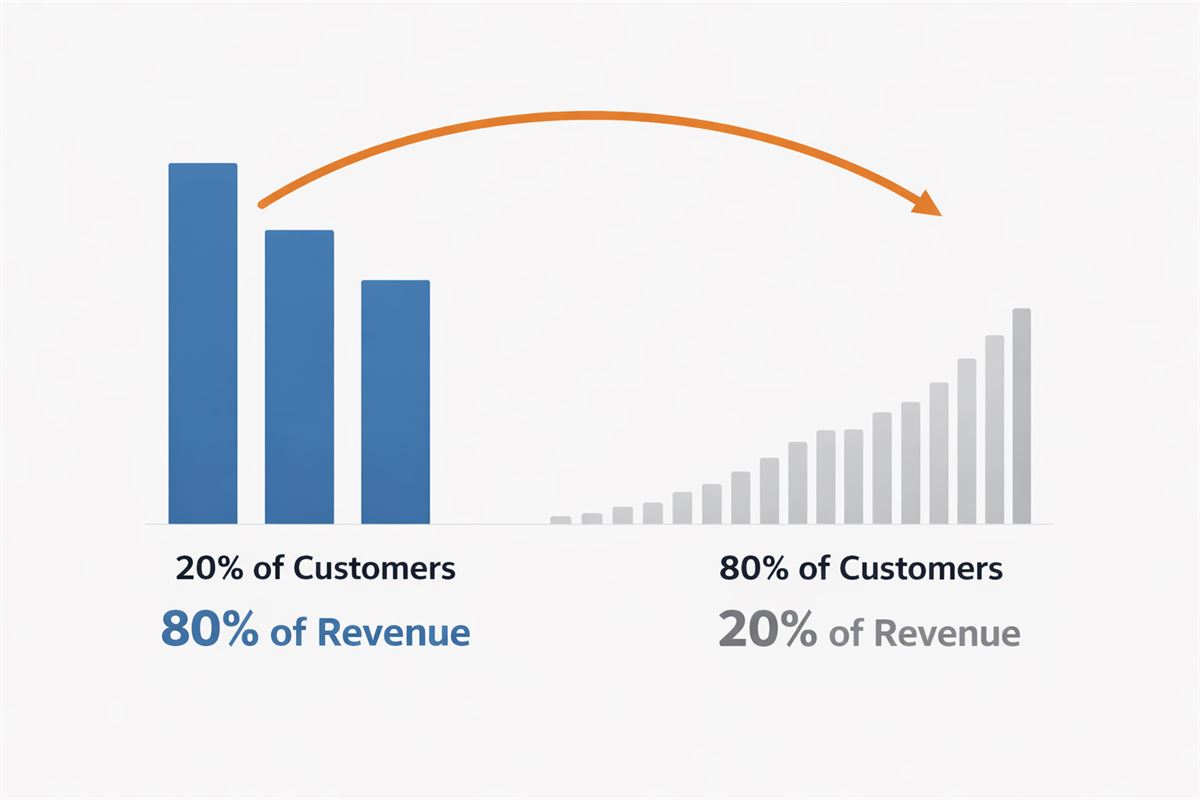
The 80/20 principle shows up in business constantly. A small percentage of customers typically drive a large percentage of revenue and profit. Harvard Business Review has covered variations of this pattern across industries for decades. If your revenue is already concentrated, your growth strategy should acknowledge that. Instead of asking, “How do we reach more people?” Ask, “Which specific accounts would actually matter?” That question changes behavior.
B2B Buying Is Complex
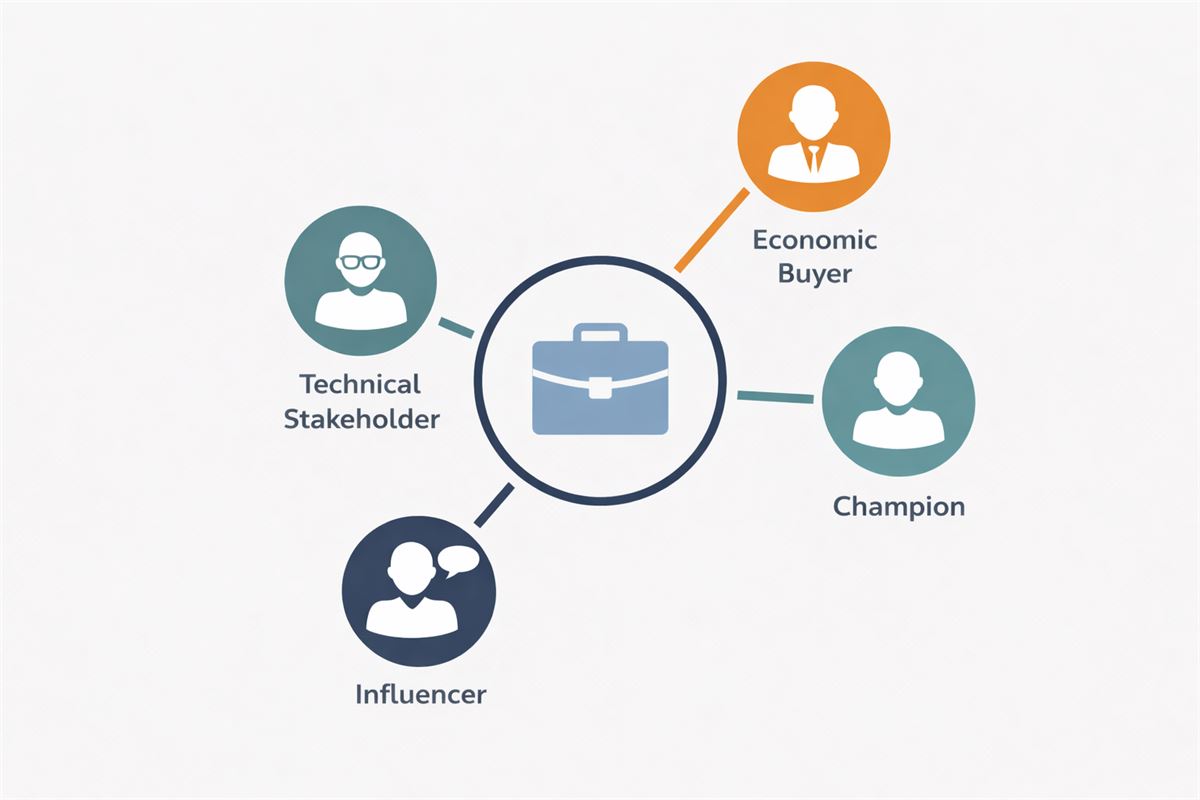
Gartner estimates the typical B2B buying group includes 6 to 10 decision makers. That alone makes random prospecting inefficient. If multiple stakeholders influence a deal, then focusing on specific accounts and systematically building presence inside them makes more sense than blasting generic outreach at a wide list. Dream 100 thinking aligns with how B2B buying actually works.
ABM Data Backs It Up
ITSMA research consistently shows account-based marketing programs outperform broad demand generation in ROI. That’s not because ABM is trendy. It’s because focus improves relevance. Relevance improves engagement. Engagement improves deal velocity. Dream 100 is the strategic layer above ABM. It decides which accounts deserve that effort in the first place.
Dream 100 vs ABM vs Target Account Selling
They overlap. But they aren’t identical.
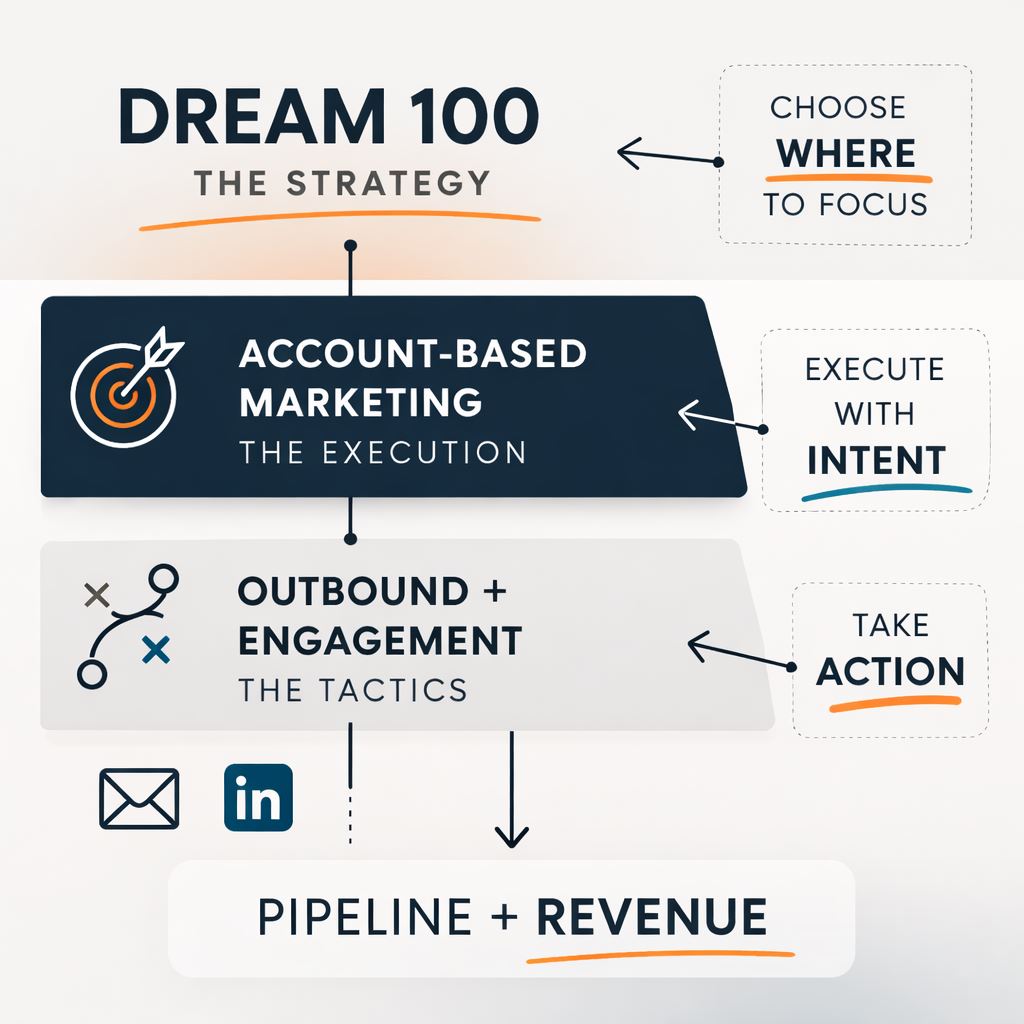
Dream 100 is the strategic decision about where to focus.
ABM is the coordinated marketing execution against those accounts.
Outbound list building is the tactical layer.
Dream 100 comes before the tools. It’s about choosing. Once you’ve chosen your accounts, the best LinkedIn automation tool for B2B becomes the execution layer for activating them systematically.
Step 1. Start With Your Best Customers, Not a Wish List
This is where most teams go wrong. They build a Dream 100 based on aspiration. Big logos. Fast-growing brands. Companies that look impressive in a pitch deck. But aspiration doesn’t equal profitability.
Before you list a single target account, look backward. Pull the last 12 months of revenue and segment by: industry, company size, deal size, sales cycle length, delivery complexity, and margin. Now apply a simple filter. Which 20% of accounts drive the most revenue or profit? Then go deeper. Which accounts respect your process, renew easily, implement your recommendations, and don’t create operational chaos? That group defines your real Ideal Customer Profile. Your Dream 100 should be built to clone that pattern.
Step 2. Build the Dream 100 List Intentionally
Once your ICP is grounded in reality, you’re ready to build the list. Start with qualification criteria. What must be true for an account to belong? Revenue range, employee band, industry, geography, trigger events, and strategic initiatives that align with your solution.
Then define list size based on capacity. If you can only meaningfully engage 50 accounts in a 60–90 day cycle, your Dream 100 doesn’t need to be 100 yet. It can be 25. Or 50. “100” is a philosophy. Not a requirement.
Build the Dream 100 in Apollo
Once your criteria are clear, this is where tools help. Apollo is the platform I use most for building account lists and pulling buying groups efficiently. If you’re building outbound seriously, it’s worth having.
Go into Company Search. Build accounts first. Not contacts. Apply your baseline ICP filters: industry, headcount, revenue range, and location. This gives you a relevant universe. Then layer in real-world qualifiers: keywords in company description, hiring signals tied to your problem, specific technologies they use, funding or growth signals, and multi-location indicators.
Add filters gradually and watch the list shrink. If you still have 2,000 companies, you’re not building a Dream 100. You’re building noise. Exclude aggressively: companies below your affordability floor, industries you historically struggle to close, competitors, and segments that don’t fit your delivery model. This is where list quality jumps.
Save the filtered accounts into a clearly named list. Then tag tiers immediately. After your account list is clean, switch to People Search inside those saved accounts. Pull 2–4 contacts per company: economic buyer, functional owner, and technical stakeholder if relevant.
Step 3. Tier the Dream 100
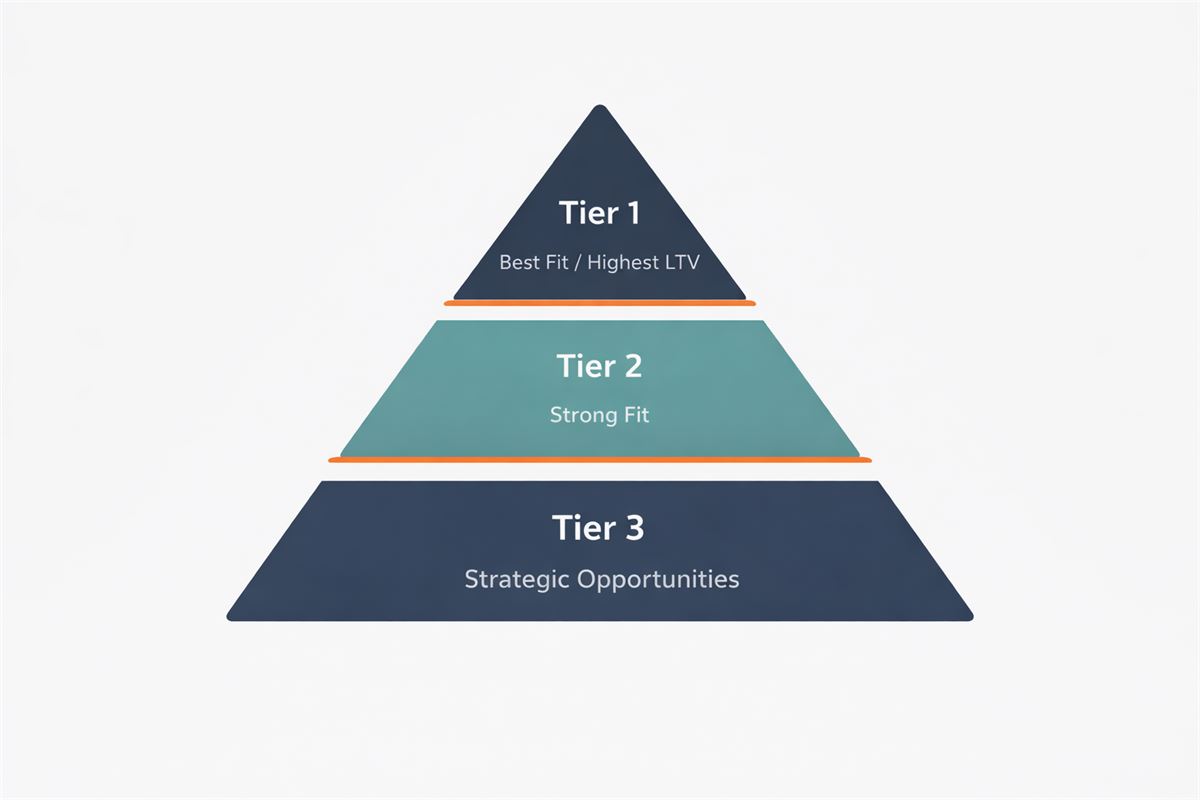
Not all accounts deserve equal energy. Create tiers based on alignment.
Tier 1 — Near-identical to your top customers. Same industry. Same size band. Same pain profile. High expected LTV.
Tier 2 — Strong fit but slightly earlier stage or less proven.
Tier 3 — Strategically interesting but not perfect.
Tiering prevents emotional over-investment in accounts that look exciting but don’t match your model. Tier 1 should feel meaningful. If you landed 5, revenue shifts.
Step 4. Activate the Dream 100 Without Spamming Them
This is where execution breaks down. Teams build the list. Feel productive. Then send one generic sequence and call it “ABM.” Activation should reflect tier. For a 30–60 day window, your motion might include: personalized email outreach, LinkedIn connection and engagement, thoughtful follow-ups referencing industry context, multi-threading across 2–4 stakeholders per account, and occasional value assets or direct mail for Tier 1.
Tier 1 should not receive the same templated message as Tier 3. Depth scales differently than volume. Dream 100 activation is not about pressure. It’s about sustained, relevant presence. Make sure your CRM is tracking engagement across every account and contact in the list.
How to Measure If It’s Working
You won’t see closed deals immediately. So watch leading indicators: connection rate inside target accounts, meetings booked per tier, number of stakeholders engaged per account, and response quality — not just response volume.
Then track pipeline metrics: opportunity creation rate, deal velocity by tier, win rate, and average deal size shift. Quarterly, review the list. Markets shift. Positioning evolves. Capacity changes. Your Dream 100 should evolve too.
Common Mistakes
- Confusing influencers with revenue accounts.
- Building 500 accounts “just in case.”
- Not tiering.
- Treating it like a cold email list.
- Never revisiting profitability data.
- Expecting instant pipeline from relationship-based selling.
The Dream 100 is not a campaign. It’s a focus discipline. And it works best when it’s part of a broader B2B marketing strategy that compounds over time.
FAQ
What is the Dream 100 strategy?
The Dream 100 strategy is a focused approach to identifying and prioritizing a curated list of high-value accounts that deserve disproportionate time and effort because winning them would significantly impact revenue.
Who created the Dream 100?
The concept was popularized by Chet Holmes in The Ultimate Sales Machine.
Is Dream 100 the same as account-based marketing?
Not exactly. Dream 100 defines which accounts to focus on. Account-based marketing is the coordinated execution against those accounts.
How many accounts should be in a Dream 100?
It depends on your capacity. The principle is focus. For some companies that’s 25. For others it’s 100. The number matters less than the discipline.
Is Dream 100 only for large B2B companies?
No. Founder-led companies under $5M often benefit the most because focus protects limited resources.
Final Thought
The Dream 100 isn’t about collecting logos. It’s about deciding where disproportionate effort is rational. Revenue in B2B is concentrated. Buying is complex. Attention is scarce.
If you try to be relevant to everyone, you dilute your positioning. If you choose deliberately, your outreach improves. Your messaging sharpens. Your pipeline gets cleaner.
Or if you’re just getting started with marketing, get my free course to build your marketing foundation in 6 weeks.
Dream 100 isn’t hype. It’s restraint. And restraint compounds.