
Last updated: July 30, 2026
The Short Version
GoHighLevel can run your entire B2B sales funnel for $97/month. This guide walks through how to map your buyer journey to GHL pipeline stages, build capture pages that qualify instead of just collect, set up multi-channel workflows for B2B nurture cadences, and track deals from first touch to close. No agency-speak. Just the system I build across my B2B clients.
A B2B sales funnel in GoHighLevel connects landing pages, qualification forms, CRM pipelines, and multi-channel automation workflows into one system that captures leads, qualifies them, and moves them through deal stages automatically.
If you’re running a B2B company and paying for a CRM, a funnel builder, an email platform, and a scheduling tool that don’t talk to each other, you already know the problem. Leads fall through gaps. Follow-ups happen late or not at all. And nobody can tell you where the pipeline actually breaks.
I’ve set up GoHighLevel as the sales and marketing backbone for multiple B2B companies, and the thing that surprised me most wasn’t the feature set. It was how fast a single operator could get a real funnel running without stitching five tools together. If you want a deeper look at the platform itself, here’s my full GoHighLevel review.
But building a B2B funnel inside GHL is different from what you’ll find in every tutorial online. Those tutorials teach you how to build a landing page for a fitness coach. That’s not what we’re doing here.
This is the step-by-step system for B2B.
What Makes a B2B Sales Funnel Different?
B2B funnels serve buying committees, not individual buyers. They run longer cycles, involve more stakeholders, and break at handoffs between marketing and sales.
That’s not a small distinction. It changes everything about how you build the funnel, what you ask on forms, how you design nurture sequences, and what your pipeline stages should look like.
According to SPOTIO’s 2026 research, the average B2B buying committee now includes 8–13 decision makers across multiple departments. Sales cycles typically run 3–12 months. Compare that to a B2C funnel where someone clicks an ad, fills out a form, and books a call in 20 minutes.
B2C funnels break at the landing page. B2B funnels break at the handoff. Why does that matter? Because it changes what your funnel system needs to do.
Your system needs to qualify, route, nurture over weeks or months, and track where every deal sits in the pipeline. That’s where GHL earns its keep, because the CRM, funnel builder, and automation engine all live in the same place.
If you’re still building your broader marketing foundation, start with the B2B marketing playbook before jumping into funnel mechanics.

Why GoHighLevel Works for B2B Funnels (And Where It Doesn’t)
GoHighLevel isn’t the prettiest funnel builder on the market. It’s not the fastest-loading, either. But for B2B companies that need capture, CRM, automation, and pipeline tracking in one login, it’s hard to beat on value.
Where GHL wins for B2B:
- CRM, funnel builder, and automation in one platform for $97/month
- Unlimited funnels on every plan (no page or visitor limits)
- Visual pipeline management with automated stage movement
- Multi-channel workflows combining email, SMS, and voicemail drops
- Form and survey integration that feeds directly into CRM pipelines
- Built-in calendar booking and Conversation AI for qualification
Where it falls short:
- Email deliverability can be inconsistent, especially if you’re migrating from a dedicated email platform. GHL uses Mailgun, and inbox placement requires proper domain setup and warm-up.
- Page speed runs slower than dedicated funnel tools. Competitors load in 1.2 seconds on average, while GHL pages can take 4–5 seconds without compressing images and cleaning up the page code.
- Design flexibility is limited compared to WordPress or ClickFunnels. You won’t be building award-winning landing pages here, but for B2B lead capture, the templates work.
Who should use it: B2B companies between $500K and $50M in revenue that want to consolidate tools, automate follow-up, and run a real pipeline without hiring a marketing ops team. Especially strong for service businesses, consultants, agencies, and MSPs.
Who shouldn’t: Companies that need enterprise-grade email deliverability from day one, teams that already have a CRM they love (like Salesforce), or anyone who needs pixel-perfect page design. If you’re comparing platforms, here’s the GoHighLevel vs HubSpot breakdown.
How to Map Your B2B Buyer Journey to GHL Pipeline Stages
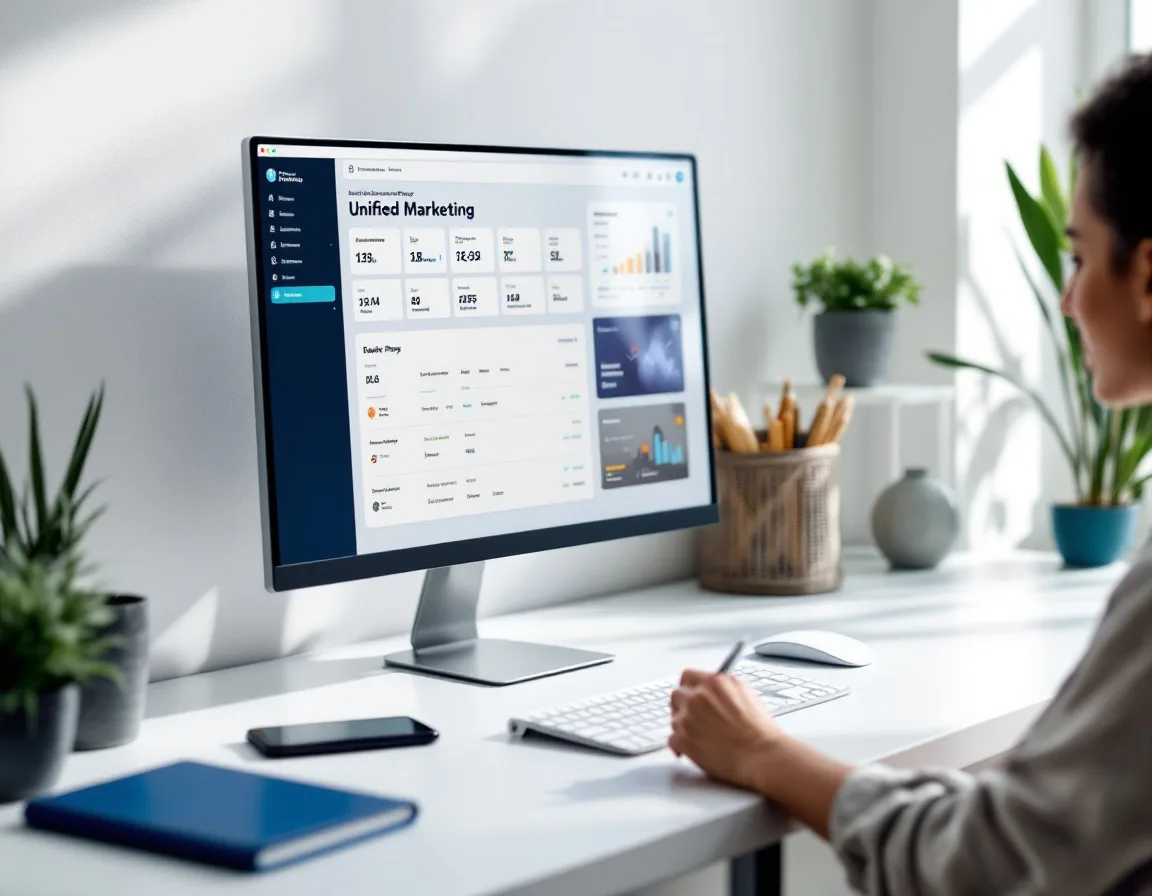
Create pipeline stages that mirror your buyer’s decision process, not your internal sales steps. The buyer doesn’t care about your deal stages. They care about whether you understand their problem.
Here’s a B2B pipeline structure that works across services, SaaS, and consulting:
| Pipeline Stage | What It Means | Trigger to Move Forward |
|---|---|---|
| New Lead | Form submitted, initial contact info captured | Automatic on form submission |
| Qualified | Meets ICP criteria (right company size, role, budget authority) | Manual review or survey-based scoring |
| Discovery Call Booked | Agreed to a conversation | Calendar booking confirmed |
| Proposal Sent | Received pricing or scope document | Proposal delivered |
| Negotiation | Active back-and-forth on terms | Reply received after proposal |
| Closed Won | Signed and paid | Contract executed |
| Closed Lost | Deal didn’t close | Manual update with loss reason |
Set this up in GHL under CRM → Pipelines → Create Pipeline.
Three things matter here. First, add custom fields for B2B qualification: company size, annual revenue range, budget timeline, and decision-maker role. Second, use tags to track lead source (which funnel, which campaign, which channel). Third, set up automations that move contacts between stages based on actions, not just manual dragging.
The pipeline isn’t a filing cabinet. It’s a workflow trigger.

Step 1: Build Your Lead Capture Funnel Page
Go to Sites → Funnels → Create New Funnel. Pick a template or start from scratch. For B2B, start from scratch. The templates are designed for coaches and local businesses.
Your B2B capture page needs three things. A headline that speaks to the business problem (not the product). A short description of what they’ll get. And a form that qualifies without killing conversion rates.
Here’s the tension: every form field you add reduces completions. But in B2B, you need more than just a name and email. A form that captures name, work email, company name, and role gives you enough to qualify without requiring a phone call.
| Field | Required? | Why |
|---|---|---|
| First name | Yes | Personalization in nurture sequences |
| Work email | Yes | Filters personal Gmail addresses |
| Company name | Yes | Qualification and CRM enrichment |
| Job title/role | Yes | Decision-maker identification |
| Company size | Optional | Helps prioritize follow-up speed |
| Phone number | Optional | Better for BOFU offers, kills TOFU conversion |
Skip the phone number field on top-of-funnel offers like guides or reports. Add it for bottom-of-funnel offers like free consultations or demos.
Your thank-you page isn’t an afterthought. It’s where you set expectations, offer a calendar link for the most engaged leads, and start the relationship. A one-line “thank you for submitting” wastes the highest-intent moment in your funnel.
Test on mobile before publishing. Over 60% of traffic hits your funnel on a phone. If the form cuts off or the button doesn’t render, you’re losing leads you already paid to attract.
Step 2: Connect the Funnel to Your CRM Pipeline
This is the moment GHL separates from standalone funnel tools. When someone submits your form, GHL automatically creates a contact record in your CRM with every field mapped.
Go to the form settings inside the funnel editor and map each field to the corresponding CRM contact field. Then set up a workflow trigger: Automation → Create Workflow → Trigger: Form Submitted → select your funnel form.
That workflow should do four things immediately:
- Create the contact and add them to the pipeline at the “New Lead” stage
- Apply a tag for lead source (e.g., “Funnel: B2B Guide Download”)
- Send an internal notification to the person responsible for follow-up
- Start the nurture sequence (see Step 3)
Without this connection, you have a landing page, not a funnel. The funnel is the system behind the page. The page is just the front door.
One thing I learned the hard way: GHL’s form-to-pipeline connection is only as good as your field mapping. If you skip the company name field or don’t tag the lead source, your pipeline becomes a mess within two weeks. Set it up right the first time.
Step 3: Set Up Multi-Channel Nurture Workflows
B2B nurture isn’t about sending daily emails. It’s about staying present across weeks or months without being annoying. So what does a good B2B cadence actually look like inside GHL?
Research from MarketingProfs (2024) found that 71% of B2B marketers credit automated nurturing workflows for revenue growth. And Deloitte’s analysis showed that automated follow-up saves 6.4 hours per rep per week.
That time savings is real. I’ve seen it with my clients.
Here’s a B2B nurture workflow structure that works inside GHL:
Day 0 (immediate): SMS confirmation + email with the promised resource. Speed matters. The lead is warmest right now.
Day 1: Email with a relevant case study or proof point tied to the resource they downloaded.
Day 3: SMS check-in. Short and personal. “Hey [First Name], did the guide make sense? Happy to answer questions.”
Day 7: Email with a related blog post or comparison piece. Link to something like your marketing automation system breakdown if they downloaded something adjacent.
Day 14: Calendar invite CTA. “Want to talk through how this applies to your company? Grab 15 minutes here.”
Day 21 (if no reply): Final nudge. Then move to a long-term monthly nurture list.
Build this in GHL’s Workflow Builder using Wait steps between each action. Add If/Else branches: if the contact replies at any point, stop the sequence and notify your sales team. If they book a call, move them to “Discovery Call Booked” in the pipeline automatically.
The Starr Conspiracy’s 2024 benchmark data shows a 32% reduction in average sales cycle length for B2B companies using advanced automation workflows. That’s not a minor improvement. That’s the difference between closing a deal in 4 months versus 6.
The biggest mistake I see: building the same nurture sequence for every lead source. Your TOFU leads who downloaded a guide need a different cadence than BOFU leads who requested a demo. Build separate workflows for each.
Step 4: Build Your Qualification and Booking System
Volume doesn’t close B2B deals. Qualification does.
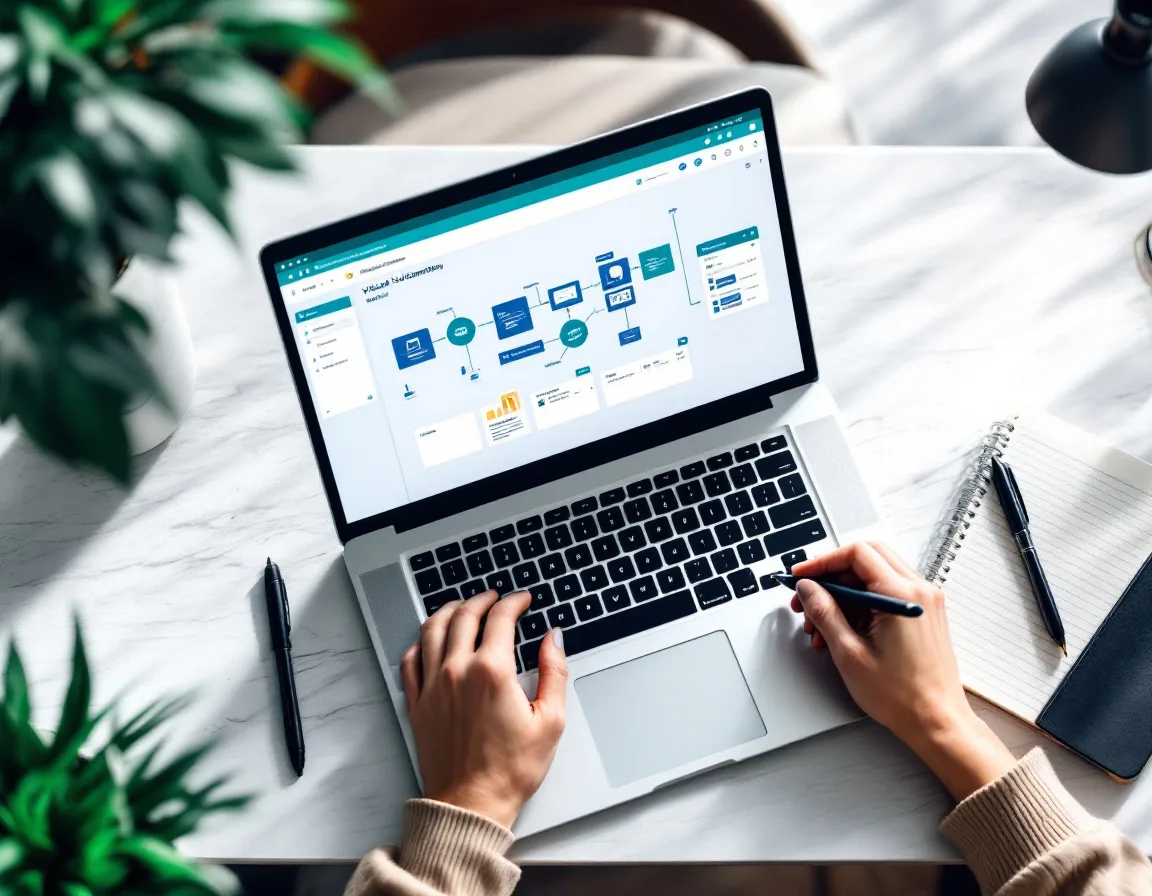
GHL’s calendar and survey tools let you build a qualification layer that filters before a sales conversation happens. Here’s the setup:
Survey-based qualification: Create a multi-step survey in GHL (Sites → Forms → Survey). Ask 3–4 qualifying questions: what’s your biggest challenge, how soon are you looking to solve it, what’s your budget range, and who else is involved in this decision. Each answer can trigger a different tag, which routes leads to different workflows.
Calendar integration: Connect GHL’s built-in calendar to your booking flow. Set availability, add buffer time between calls, and configure automated confirmation + reminder sequences (email + SMS, 24 hours and 1 hour before).
Conversation AI: If you’re on a plan that supports it (or add the $97/month AI Employee), GHL’s Conversation AI can respond to inbound leads via SMS in real-time, ask qualifying questions from your knowledge base, and push qualified leads directly to the calendar. This alone can cut your speed-to-lead from hours to seconds.
Why this matters: Lunas Consulting’s 2025 benchmark data shows that only 13–21% of MQLs become SQLs. That single stage is where the pipeline leaks the most. A survey-based qualification step between “form submitted” and “call booked” catches bad-fit leads before they waste your sales team’s time.
Step 5: Track, Measure, and Fix the Leaks
A funnel without tracking is just a landing page with delusions.
GHL gives you analytics on funnel page performance (views, opt-ins, conversion rate) and pipeline reporting (deals by stage, conversion between stages, revenue tracking). But you need to know which numbers actually matter for B2B.
| Metric | What It Tells You | Benchmark |
|---|---|---|
| Funnel conversion rate | Are visitors turning into leads? | 2–5% for cold traffic, 10–25% for warm |
| Speed to lead | How fast does the first follow-up happen? | Under 5 minutes is the target |
| MQL-to-SQL rate | Are your leads actually qualified? | 13–21% average, 25–40% is strong |
| Pipeline velocity | How fast are deals moving through stages? | Track monthly, watch for stalls |
| Cost per opportunity | How much does it cost to get a sales conversation? | Varies by channel and industry |
Research from Powered by Search shows that SEO-generated leads convert MQL-to-SQL at 51%, compared to 26% for paid traffic. If you’re building funnels for paid ads, know that your qualification layer needs to be stronger because lead quality is lower.
Check these numbers weekly. The most common pattern I see: the funnel converts fine, but leads stall at “Qualified” because nobody follows up within the first 24 hours. That’s a process problem, not a funnel problem. GHL’s workflow automation can fix it, but only if you build the trigger.

What This System Actually Costs
Here’s the math. A typical B2B company running separate tools for CRM, funnels, email automation, and scheduling pays $500–1,200/month before any of it connects properly.
| Tool Category | Typical Separate Cost | GHL Replacement |
|---|---|---|
| CRM (HubSpot, Pipedrive) | $50–800/month | Included |
| Funnel builder (ClickFunnels) | $97–297/month | Included |
| Email automation (ActiveCampaign) | $29–149/month | Included |
| SMS marketing (Twilio + platform) | $50–200/month | Usage-based ($0.0079/segment) |
| Scheduling (Calendly) | $12–20/month | Included |
| Total separate | $238–1,466/month | $97/month (Starter) |
GHL’s Starter plan at $97/month includes unlimited funnels, unlimited contacts, CRM, pipelines, email, calendar, and automation. Email and SMS are usage-billed on top, but for a B2B company running moderate volume, that adds $20–50/month.
I’m not going to pretend this is a perfect tool. It’s not. But for B2B companies under $50M in revenue that need a single system instead of a Frankenstein stack, the economics work.
Start a free 30-day trial of GoHighLevel and build your first pipeline before the trial ends. If you want a deeper comparison before committing, read my how to replace HubSpot and cut your budget in half guide.

The Bottom Line
Building a B2B sales funnel in GoHighLevel isn’t complicated, but it’s different from what the tutorials teach.
Map your buyer journey before you touch the funnel builder. Build qualification into the process so your sales team talks to the right people. Set up automation that respects B2B timelines instead of blasting daily emails. And track the metrics that actually tell you where the pipeline breaks.
The platform gives you everything in one login. What it doesn’t give you is the strategy. That part’s on you.
If you’re evaluating whether GHL is the right fit, start with the GoHighLevel review. If you’re ready to build, grab the 30-day free trial and follow the steps above.
Holly Mack is a fractional CMO who builds marketing systems for B2B companies from startup through $50M in revenue. She runs GoHighLevel as the CRM and automation backbone for multiple clients and writes about marketing tools, strategy, and systems at hollymack.com.
Common Questions About B2B Sales Funnels in GoHighLevel
Can GoHighLevel handle complex B2B sales cycles with multiple decision makers?
Yes, but you need to set it up for that. GHL’s pipeline lets you create custom fields for each contact (role, department, budget authority) and link multiple contacts to a single opportunity. It’s not as deep as Salesforce for enterprise account mapping, but for companies under $50M it covers the workflow. The key is building separate tags for each stakeholder so your nurture sequences address the right person with the right message. I’ve run this setup across consulting firms and MSPs, and the limitation isn’t the tool. It’s whether you take the time to map the buying committee before you build.
Is the GHL funnel builder good enough for B2B, or do I need ClickFunnels?
For B2B lead capture, GHL’s funnel builder is more than enough. You’re not building a $47 product sales page with countdown timers and order bumps. You’re building a clean capture page with a headline, a few bullet points, and a qualified form. Where GHL wins is everything that happens after the form submission. The CRM connection, pipeline automation, and multi-channel follow-up all run in the same system. ClickFunnels can’t do that without bolting on three other tools.
How do I fix GoHighLevel email deliverability for B2B outreach?
Start with proper domain authentication. Set up SPF, DKIM, and DMARC records before sending a single email. Then warm your domain gradually: send 50 emails per day for the first week, increase by 50 each week after. Don’t import a cold list and blast 5,000 emails on day one. For high-stakes B2B outreach, consider keeping your outbound email on a dedicated cold email tool and using GHL’s email for inbound nurture sequences only.
What’s the difference between a funnel and a website in GoHighLevel?
A funnel is a focused sequence of pages designed to guide a visitor toward one specific action. A website is a multi-page navigation experience. In B2B, use funnels for campaign-specific landing pages (guide downloads, demo requests, webinar registrations) and the website builder for your main company site. Don’t try to run your whole web presence through funnels. It doesn’t work for SEO and it confuses visitors who want to browse.
How many funnels can I build on the $97 Starter plan?
Unlimited. Every GHL plan includes unlimited funnels, unlimited pages, unlimited contacts, and unlimited users. The Starter plan caps you at 3 sub-accounts, which matters if you’re an agency. For a single B2B company running its own funnels, Starter covers it.