
Last updated: September 16, 2026
The Short Version
B2B lead generation isn’t a channel decision. It’s a system. This guide covers how the whole thing works — inbound, outbound, visitor identification, qualification, and measurement — and the specific tools and tactics that generate pipeline in 2026 without burning your budget on activity that never converts.
B2B lead generation is the process of identifying companies that fit your ICP, getting in front of them through inbound content or outbound outreach, and moving them into qualified sales conversations — through a connected system, not disconnected tactics.
Here’s a number that should recalibrate how you think about this: according to MarketingSherpa, 79% of marketing leads never convert to sales. Not because the leads were bad. Because the system around them was broken.
Wrong definitions. Slow follow-up. No nurture between “downloaded something” and “ready to buy.” A B2B marketing strategy built around volume instead of qualification. Most B2B lead gen programs aren’t failing on tactics. They’re failing on architecture.
This post is the architecture. What a functional B2B lead generation system looks like, how each part works, and exactly which tools make the execution viable for teams that don’t have a 12-person demand gen department.
What B2B Lead Generation Actually Is
B2B lead generation is the process of identifying businesses that fit your ideal customer profile and moving them into sales conversations through inbound, outbound, or both.
That definition has three words worth focusing on: businesses, fit, and conversations. Not individuals. Not any company with a pulse and a budget. Not form fills. Conversations with people at companies that could realistically become customers.
The gap between “leads” and “qualified leads” is where most B2B programs collapse. A company can generate 400 MQLs a month and still have a sales team that says marketing produces garbage. Both sides are usually right. Marketing is optimizing for the metric they’re measured on — volume. Sales is dealing with the downstream reality that most of those leads were never buyers.
The goal isn’t more leads. It’s more conversations with people who can actually buy.
Why Most B2B Lead Gen Programs Break Down
The pattern isn’t random. Same failure modes, across industries, across company sizes.
Gating everything. The gated ebook was a reasonable lead gen strategy in 2018. In 2026, 73% of B2B buyers actively avoid gated content according to Content Marketing Institute research. They don’t hesitate. They open a new tab and find the same information somewhere it isn’t protected by a form. Gated content also creates an AI visibility problem — a page behind a form shows a form to ChatGPT’s crawler. The content never gets cited. Gate only what’s genuinely scarce and proprietary. Keep the rest ungated and let it do compound content work.
Loose MQL definitions. A form fill is not a buying signal. Someone who downloaded a guide to see if it was useful has shown mild interest in a topic. That’s not the same as intent to buy. When marketing is measured on MQL volume, they rationally optimize for volume — broad ads, low-barrier gated assets, generic messaging. The MQLs stack up. The pipeline doesn’t. The cross-industry MQL-to-SQL conversion rate sits at 13%, meaning 87% of MQLs never become sales-qualified. That’s a definitional problem, not a channel problem.
Slow follow-up. This one costs more than people think. Companies that follow up within the first hour convert at 53% MQL-to-SQL compared to 17% for follow-ups made after 24 hours. That’s not a marginal difference. Following up the next business day on a hot inbound lead is leaving most of the value on the floor.
No system connecting channels. Cold email runs, LinkedIn gets posted, maybe some paid ads are running. None of them know about each other. A prospect gets a cold email, ignores it, then sees a LinkedIn post from the same company, then gets a follow-up email that treats them like a cold contact even though they’ve now touched the brand three times. The channels don’t compound. They just coexist.
Inbound Lead Generation: Capturing Demand That Already Exists
Inbound lead generation is the process of attracting buyers who are already researching solutions and getting them into your pipeline before they contact a competitor.
It’s slower to build than outbound. Genuinely. A content and SEO program takes 6-12 months before it produces consistent inbound traffic, and longer before that traffic converts to meaningful pipeline. But the economics over time are hard to argue with. SEO leads close at 14.6% compared to 1.7% for cold outbound — and SEO cost-per-lead runs around $31, the lowest of any B2B channel by a significant margin.
The inbound system has three moving parts.
Content that captures research-stage buyers. Answer-first guides on the queries your buyers actually search. Comparison pages for the tools they’re evaluating. Pricing content that tells them what they need to know without making them call a sales rep. This content doesn’t convert immediately. It builds familiarity and positions the brand on the shortlist that forms before any vendor contact happens.
SEO and AI search visibility. The same content needs to rank in traditional search and show up in AI-generated answers. About 2% of B2B website traffic converts via form fills. The other 98% leaves without a trace — unless you’re identifying them. More on that below.
LinkedIn as an inbound channel. Not paid ads specifically, though those can support inbound. Organic content from a real person, whether that’s the founder, a fractional CMO, or whoever runs the company’s perspective, builds the kind of sustained brand familiarity that makes cold outreach warmer and inbound traffic more likely to convert. Someone who’s followed you for six months and then lands on your site converts differently than a stranger. The LinkedIn marketing strategy post covers how to build that presence deliberately.
Outbound Lead Generation: Creating Conversations That Wouldn’t Happen Otherwise
Outbound gets leads faster. That’s the real advantage. A well-built outbound system can produce qualified conversations in 4-8 weeks, compared to the 6-12 month ramp on inbound. If you need pipeline next quarter, outbound is the lever.

It works differently now than it did 5 years ago. Volume without personalization has collapsed. Cold email platform averages sit around 3.43% reply rate across all senders. The top performers running tight ICP targeting with genuine personalization consistently hit above 10%. The difference is entirely in targeting and message quality, not in sending more emails.
Here’s how a modern B2B outbound stack works.
Prospecting and data. Apollo is the right starting point for most B2B companies under $50M. 240M+ contacts, intent signals built in, email sequencing, and a Chrome extension for prospecting wherever you already work. The key is layering your filters — firmographic (industry, size, geography) plus technographic (tools they’re using) plus intent signals (who’s researching your category). A list of “SaaS companies, 50-200 employees” converts at a fraction of the rate of “SaaS companies, 50-200 employees, using HubSpot, currently researching CRM alternatives.”
Cold email. Instantly AI handles the sending infrastructure — deliverability warming, inbox rotation, domain management, the pieces that kill campaigns before a message ever reaches a human. One in six B2B emails never reaches the inbox due to filtering. Infrastructure isn’t a nice-to-have. It’s the prerequisite for everything else.
LinkedIn outreach. HeyReach runs LinkedIn outreach across multiple sender accounts at scale without triggering LinkedIn’s automation detection. The reason to use multiple accounts isn’t to spam — it’s to reach more of the ICP without burning a single profile’s connection limits. Used well, LinkedIn outreach produces some of the warmest outbound conversations because you’re reaching buyers in a professional context they’re already active in. Our guide to LinkedIn lead generation goes deeper on the mechanics.
Multichannel sequencing. The minimum viable sequence in 2026 is email plus LinkedIn. Multichannel outbound lifts reply rates 30-50% over email-only and can boost overall engagement significantly. The mechanic is simple: email opens the conversation, LinkedIn reinforces the brand, follow-up email references the connection. Three touches, two channels, one coherent message.
Website Visitor Identification: The Layer Most Companies Skip
Here’s what’s happening on your website right now. A buyer is reading your pricing page. They’ve looked at three pages. They work at a company that fits your ICP perfectly. And they’re about to close the tab and never fill out a form.
That’s not unusual. Only about 2% of B2B website traffic converts through form fills. The other 98% — including the people actively evaluating your solution — vanish without a trace.
Website visitor identification fixes that. rb2b identifies US-based website visitors at the person level — name, LinkedIn URL, job title, work email on paid plans — and pushes that data into Slack, a CRM, or your outbound tool in real time. Not company-level guessing. Person-level identification on visitors who are already on your site, already reading your content, already interested enough to spend time with you.
The workflow is straightforward: someone visits your pricing page, rb2b identifies them, a notification fires to your sales team or into an outbound sequence, and outreach goes out the same day instead of never. That same-day outreach matters — identified visitors convert dramatically better when you reach them while they’re still in the research window.
Worth noting: rb2b works on US IP addresses for person-level identification. International traffic gets company-level only, which is still useful but different. If your ICP is global, factor that in when building the identification layer.
Qualifying Leads: MQL vs SQL and Why the Distinction Matters
Not all leads deserve sales time. Qualification is the process of deciding which ones do — before the sales team spends an hour on a call that was never going to close.

The standard split is MQL (Marketing Qualified Lead) and SQL (Sales Qualified Lead). MQL means marketing has decided the contact meets some minimum threshold of fit and engagement. SQL means sales has reviewed it and agreed it’s worth working as a real opportunity.
The gap between them — the 13% median MQL-to-SQL conversion rate — is where most B2B lead gen programs quietly fail. Either the MQL definition is too loose (any form fill counts), the handoff is too slow, or sales and marketing don’t agree on what “qualified” means. All three are fixable. None of them require more leads.
The fastest fix: add a minimum intent signal before anything gets classified as an MQL. A pricing page visit. A demo request. A third-party intent signal showing the company is researching your category. Teams that require an actual intent signal before MQL classification run MQL-to-SQL rates above 16% compared to 9.8% for teams using basic engagement scoring.
The Inbound vs Outbound Question
Both. The answer is almost always both.
Outbound gives you speed and control. You can choose exactly who you want to reach and get in front of them this week. Inbound gives you quality and economics. SEO leads close at 8.5x the rate of cold outbound leads, and the cost-per-lead is a fraction.
The companies that get this wrong pick one and ignore the other. Outbound-only teams run out of addressable market and burn their reputation in their ICP with low-quality spray-and-pray campaigns. Inbound-only teams wait 12 months for their SEO to compound while the pipeline stays empty.
The right model for most B2B companies under $50M: build outbound to create near-term pipeline while inbound is developing. As inbound matures and starts generating consistent traffic, shift more of the prospecting budget toward nurturing inbound leads and let outbound become a supplement rather than the primary engine. Multichannel programs — running both — consistently achieve 24% lower CPL than single-channel programs, according to Forrester 2026 data.
Measuring B2B Lead Generation
Volume metrics lie. Here’s what actually tells you whether the system is working.
| Metric | What it measures | Why it matters |
|---|---|---|
| Cost per SQL | What you pay per sales-qualified lead | CPL is easy to game. Cost per SQL accounts for quality. |
| MQL-to-SQL rate | Share of marketing leads sales agrees to work | Diagnostic for qualification quality and handoff health |
| Lead-to-close rate by channel | Share of channel-sourced leads that become customers | Tells you where the real ROI lives |
| Speed-to-lead | Time from lead creation to first sales contact | 1 hour vs 24 hours is a 3x conversion difference |
| Pipeline sourced by channel | Revenue from opportunities marketing generated | The number that tells the whole story |
Stop reporting impressions and session counts to leadership as lead gen metrics. They belong on a diagnostic dashboard, not a business review. The moment you shift the measurement to pipeline sourced and cost per SQL, the whole program recalibrates around what actually matters.
The Lead Generation Stack for B2B Companies Under $50M
You don’t need 15 tools. You need four layers working together, sitting inside a wider marketing system rather than bolted on as separate experiments.
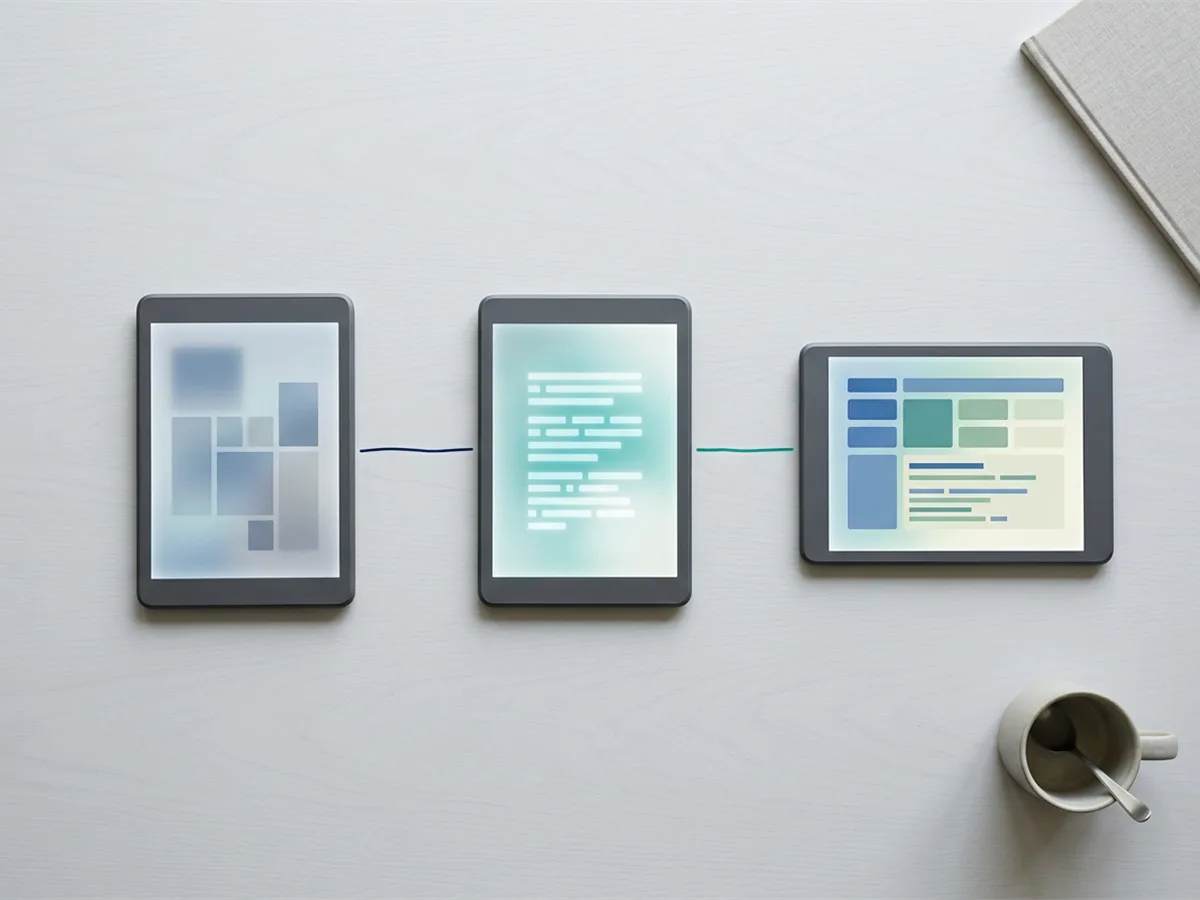
Data and prospecting: Apollo handles ICP targeting, contact data, and email sequencing in one platform. Start here.
Email sending infrastructure: Instantly AI manages deliverability, inbox rotation, and domain warming. Run cold email from here, not from Apollo’s built-in sending, when volume gets serious.
LinkedIn outreach: HeyReach for safe, scalable LinkedIn sequences across multiple sender accounts.
Website visitor identification: rb2b identifies the US visitors already on your site. Turns passive traffic into an active outbound signal.
That’s the system. CRM connects them all and tracks where pipeline is coming from. Everything else is optional until this foundation is working. If you’d rather have someone build and run it with you, that’s what a fractional CMO engagement covers.
About the Author
Holly Mack is a fractional CMO who oversees marketing strategy for B2B companies across tech, SaaS, MSP, and professional services. She holds an MBA in finance and takes a systems-first approach to building marketing engines that connect to revenue. Connect with Holly on LinkedIn.
Questions About B2B Lead Generation
What is B2B lead generation?
B2B lead generation is the process of identifying businesses that fit your ICP and moving them into qualified sales conversations through inbound content, outbound outreach, or both. The goal isn’t lead volume. It’s qualified pipeline — conversations with companies that can actually buy.
What’s the difference between inbound and outbound lead gen?
Inbound attracts buyers who are already researching, through content, SEO, and brand presence. Outbound goes to market proactively through cold email, LinkedIn outreach, and direct targeting. Inbound leads cost significantly less per lead over time and close at a higher rate. Outbound produces pipeline faster. Effective B2B lead gen programs run both.
How long does it take to generate B2B leads?
Outbound can produce qualified conversations in 4-8 weeks with a solid ICP, tight targeting, and good messaging. Inbound through SEO and content takes 6-12 months to produce consistent traffic, and longer before that traffic becomes reliable pipeline. Most B2B companies need outbound in the short term while inbound is developing.
What’s a good cost per lead for B2B?
The median B2B CPL across all channels is $213 per HubSpot’s 2026 State of Marketing data. Top-quartile programs achieve $84 through disciplined ICP-aligned targeting. CPL varies enormously by channel: SEO runs around $31, paid social around $178, ABM programs around $487 per lead. But CPL alone doesn’t tell you much. Cost per SQL and cost per closed deal are the numbers that actually matter — a $487 ABM lead that closes at 19.8% beats a $31 SEO lead that closes at 2%.
What tools do I need for B2B lead generation?
The minimum viable stack: Apollo for prospecting and contact data, Instantly AI for cold email sending and deliverability, HeyReach for LinkedIn outreach, and rb2b for identifying website visitors. A CRM to track it all. Everything else — intent data platforms, enrichment tools, AI personalization layers — adds on top once the foundation is producing.
Why aren’t my B2B leads converting to sales?
The most common reasons are a loose MQL definition (any form fill counts as a lead), slow follow-up (following up hours or days later instead of within the hour), and a disconnect between marketing’s lead definition and sales’ definition of qualified. Check all three before adding more lead generation budget. More leads into a broken qualification system just creates more noise.
How do I generate B2B leads without a big budget?
Cold email and LinkedIn outreach have the lowest startup costs of any B2B channel. A well-targeted cold email list from Apollo and a sending infrastructure setup in Instantly can be running for under $300/month. Content and SEO cost time more than money, but compound into the lowest-cost leads over the long run. Website visitor identification through rb2b has a free tier that starts identifying site visitors immediately. Start with what you can execute consistently, not what looks most impressive on paper.