

Last updated: September 17, 2026
The Short Version
A B2B marketing system is the connected infrastructure that turns marketing from a series of one-off efforts into something repeatable and predictable. It has three layers: leadership (who owns strategy and decisions), execution (the channels and content that generate pipeline), and infrastructure (the tech that holds it together). Without all three, you don’t have a system. You have a collection of projects that reset every quarter.
A B2B marketing system is the connected set of strategy, channels, processes, and technology that produces pipeline consistently — not from one campaign, but from a structure that compounds over time.
There’s a version of B2B marketing that looks productive and produces almost nothing. Emails going out. LinkedIn posts scheduled. A website that gets traffic. A content agency delivering eight blog posts a month. And somehow, at the end of the quarter, the pipeline report looks exactly the same as it did 90 days ago.
That’s not a channel problem or a content quality problem. It’s a system problem. A real B2B marketing strategy isn’t built out of campaigns. It’s built out of connected infrastructure. The difference between a marketing system and marketing activity is the difference between a machine and a pile of parts.
This post covers what a B2B marketing system actually is, what it’s built from, why most small B2B companies end up with activity instead of a system, and how to build one that compounds over time instead of resetting every quarter.
What a B2B Marketing System Is
A B2B marketing system is the integrated infrastructure that produces qualified pipeline on an ongoing basis — not from one campaign, one channel, or one hire, but from a structure of connected components that each reinforce the others.
The key word is connected. A content program that isn’t connected to lead generation doesn’t produce leads. A CRM that isn’t connected to the outreach tools doesn’t tell you what’s working. A strategy that isn’t connected to the people executing it doesn’t get executed. Individual pieces can function well in isolation and produce almost nothing because the connections aren’t there.
This is what separates a marketing system from marketing activity. Unlike a one-time campaign, a marketing system doesn’t stop when the budget runs out or the project ends. It generates awareness, builds visibility, captures intent, and moves qualified buyers into conversations continuously, with each component building on the others.
Only 40% of B2B marketers have a documented marketing strategy according to Content Marketing Institute research. The remaining 60%, who either have an undocumented strategy or no strategy at all, are running marketing activity. Not a system. The result is predictable: busy teams, inconsistent results, and a sales team that isn’t sure what marketing actually does.
Why Most B2B Companies End Up With Projects, Not a System
Here’s what typically happens.
The company needs leads. Someone decides to try LinkedIn. It works a little. Then someone else pitches SEO. That starts too. The CEO wants email campaigns. A freelancer gets hired for content. Three months later there are four things happening, none of them coordinated, and nobody owns the connection between them.
What the company actually has is a collection of projects. Each one was a reasonable decision in isolation. Together, they don’t compound. They coexist.
The pattern is consistent: without a marketing owner, not a coordinator but a leader who makes decisions about positioning, sequence, and what stops, the org fills the vacuum with execution. Things get done. Nothing builds.
The tool sprawl makes it worse. The 2026 martech landscape now counts roughly 15,505 tools, up from about 150 in 2011. The average B2B team runs 30+ tools. Gartner’s 2025 data puts effective utilization at just 33% of what’s purchased. Companies aren’t failing from a lack of options. They’re failing because the options don’t connect to each other, nobody owns them, and the strategy behind them is thin.
More tools won’t fix this. A system will.
The Three Layers of a B2B Marketing System
Every functional B2B marketing system has three layers. Missing any one of them creates a gap the others can’t compensate for.

Layer 1: Leadership
Someone owns the marketing strategy. Not the execution, the decisions. What’s the positioning? Who specifically is the ICP? What does the company say and not say? Which channels are running and which aren’t, and why? What does success look like in actual numbers?
This is the layer B2B companies most often skip, especially companies under $20M that don’t have a full-time marketing leader. They hire executors and expect strategy to emerge. It doesn’t. Execution without leadership produces activity without direction. A leadership gap has no owner by definition. The org chart looks fine, things are shipping, but nobody’s deciding what the whole thing is supposed to accomplish.
The leadership function doesn’t have to be a full-time hire. A fractional CMO who oversees strategy while operators execute fills the same gap for a fraction of the cost and lets the company build a real system instead of a collection of projects.
Layer 2: Execution
The channels and content that actually generate pipeline. Inbound channels that capture buyers who are already researching. Outbound channels that create conversations with buyers who haven’t found you yet. And the content layer that supports both, building familiarity and trust across the long B2B buying cycle.
What goes into this layer depends on the company’s ICP, deal size, and sales cycle. But for B2B companies under $50M, the core stack is almost always the same combination: SEO and content for inbound research traffic, LinkedIn for visibility and targeted outreach, cold email and LinkedIn sequences for outbound, and a lead generation system that connects it all to qualified conversations.
Execution has to be sequenced, not simultaneous. Starting five channels on the same day means five channels that each get partial attention and none of which compound. Start with the channels closest to your buyers, prove they work, and add more once the foundation holds.
Layer 3: Infrastructure
The tech and processes that hold everything together. CRM, automation, tracking, and the connection between marketing activity and sales outcomes.
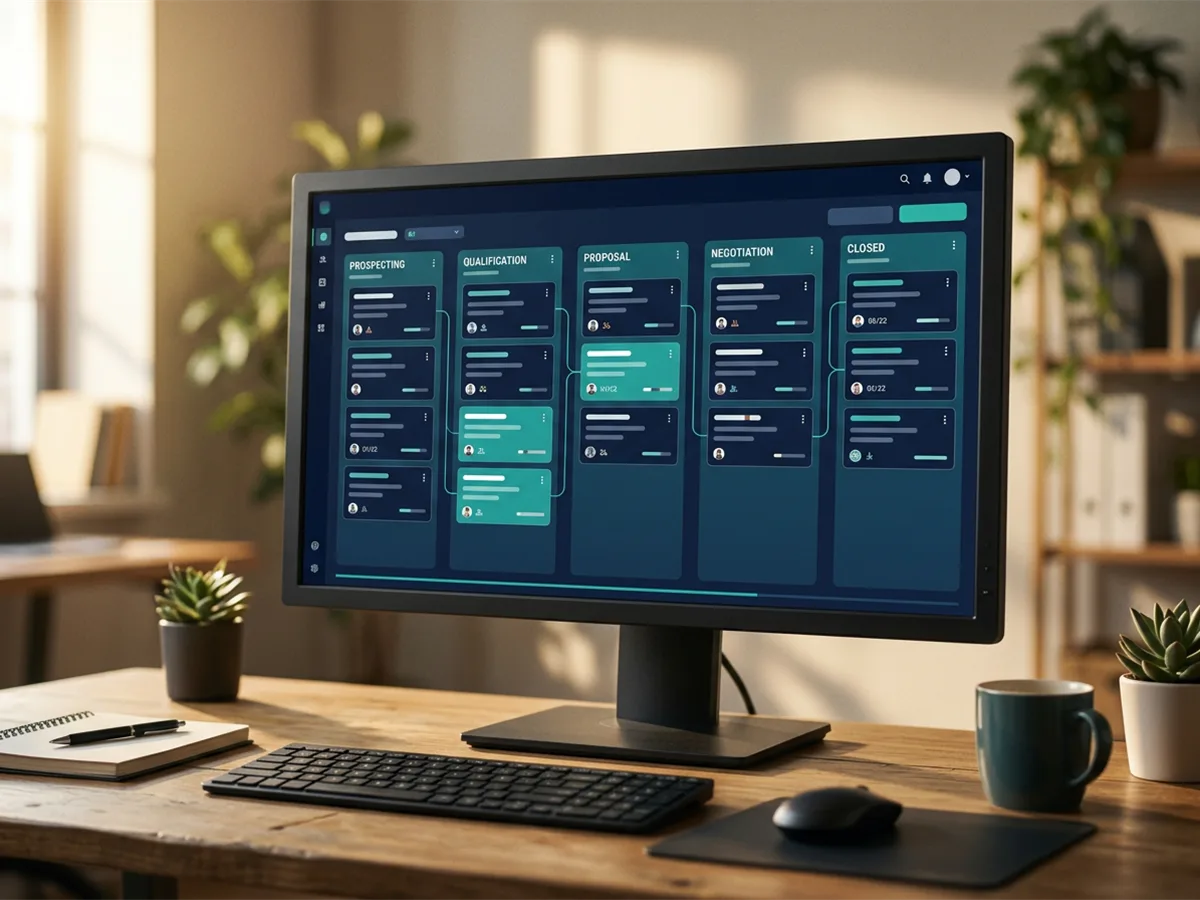
A functional B2B marketing infrastructure has a few non-negotiable pieces. CRM that tracks every contact, conversation, and pipeline stage. Marketing automation that handles follow-up, nurture, and lead routing without manual intervention. Attribution that tells you where pipeline is actually coming from. And clean data underneath all of it, because a 30-tool stack where nothing talks to each other produces garbage pipeline reporting no matter how good the individual tools are.
For B2B companies under $50M, the most common infrastructure mistake is complexity before the foundation works. Running Salesforce and Marketo before you have consistent lead flow is engineering a solution to a problem you don’t have yet. For most small B2B companies, an all-in-one platform like GoHighLevel — CRM, email, SMS, automation, funnels, and scheduling in one system starting at $97/month — handles the infrastructure layer without the tool sprawl that kills most stacks before they prove anything. For what it does and where it breaks down, the full GoHighLevel review is worth reading before you commit.
What Connects the Three Layers
The connection is measurement. Specifically, pipeline-level measurement.

Companies with strong sales and marketing alignment grow revenue close to 20% per year according to Forrester research. Companies with weak alignment often see revenue shrink. The difference isn’t usually the channels they use. It’s whether marketing and sales share a definition of what a qualified lead is, where pipeline is actually coming from, and who owns what happens after a lead enters the system.
A B2B marketing system without shared measurement between marketing and sales isn’t a system. It’s two teams reporting to the same CEO from different buildings.
The metrics that tell you whether the system is working are pipeline sourced by marketing, cost per qualified conversation, and revenue that can be traced back to a marketing activity. Session counts and social followers belong on a diagnostic dashboard. They don’t belong in a board review.
The Difference Between a System and a Campaign
A campaign has a start date and an end date. It runs. It produces results or it doesn’t. When it ends, the pipeline it generated stops.
A system has no end date. It runs continuously. Each piece builds on the previous one. A blog post creates inbound traffic that brings in a lead that feeds into a nurture sequence that converts into a qualified conversation that closes. Six months later, the same post is still generating traffic. The effort that went into building it compounds instead of expiring.
Predictability is the effect of a system, not a tactic. The companies that treat marketing as a series of campaigns are on a permanent treadmill. As soon as one campaign ends, they need to run another one just to maintain the same pipeline. The companies that build systems are building something that grows.
B2B buyers are doing most of the research before they contact anyone. 67% now prefer a rep-free buying experience per Gartner’s 2026 research. A system puts you in the right place during that research phase. A campaign shows up after the shortlist has already formed.
Building the System in the Right Order
Sequence matters. Here’s the order that works.

First: Strategy and positioning. Who are you selling to, what makes you different, and what does the company say? This is not a branding exercise. It’s the foundation that every downstream component is built on. Get this wrong and every channel runs in a slightly different direction.
Second: CRM and infrastructure. Before you generate a single lead, the system that captures and tracks them needs to exist. Set up the pipeline. Define the stages. Configure lead routing. This sounds administrative. It is. It’s also the piece that determines whether you can prove the system is working six months from now.
Third: Content and visibility. Build the content layer that puts the company in front of buyers who are researching. This takes time to compound. Start it early.
Fourth: Outbound. Layer outbound on top of the foundation once the positioning is clear and the CRM can handle what comes in. Outbound generates near-term pipeline while inbound is still developing.
Fifth: Measurement framework. Set up the attribution and pipeline reporting that connects marketing activity to revenue. Do this before running paid or before scaling any channel.
Paid is last. Running paid before the organic channels are working and the conversion path is proven means spending money to amplify a message you haven’t validated yet.
What the System Actually Produces
Not leads. Not traffic. Not followers.
Pipeline. Qualified conversations with buyers who fit the ICP and have a real reason to evaluate the company. At a cost that’s trackable. At a volume that’s predictable. On a timeline that’s consistent enough to run a business around.
That’s the difference between marketing that looks active and marketing that works. A system produces pipeline. Activity produces reports.
If the current marketing program can’t answer the question “where did this deal come from and how much did it cost to generate?” the system isn’t built yet. The good news is it’s buildable. It just needs to be built in the right order, with the right connection between the three layers.
About the Author
Holly Mack is a fractional CMO who oversees marketing strategy for B2B companies across tech, SaaS, MSP, and professional services. She holds an MBA in finance and takes a systems-first approach to building marketing engines that connect to revenue. Connect with Holly on LinkedIn.
Questions About B2B Marketing Systems
What is a B2B marketing system?
A B2B marketing system is the connected infrastructure of strategy, channels, processes, and technology that produces qualified pipeline on an ongoing basis. Unlike a campaign, it doesn’t stop when a budget runs out. It compounds over time, each piece building on the last to generate awareness, capture intent, and move buyers toward a sales conversation.
What’s the difference between a B2B marketing system and a B2B marketing strategy?
Strategy is the thinking: who you’re targeting, what you’re saying, which channels make sense, how you’ll measure success. The system is the operational infrastructure that executes the strategy repeatedly. A strategy without a system doesn’t get executed consistently. A system without a strategy runs in circles efficiently.
What does a B2B marketing system include?
Three layers: leadership (someone who owns positioning, priorities, and decisions), execution (the channels and content that generate pipeline, typically SEO, content, LinkedIn, cold email, and outbound sequencing), and infrastructure (CRM, automation, attribution, and clean data connecting all of it). Gaps in any layer undermine the other two.
What technology does a B2B marketing system require?
The minimum viable infrastructure is a CRM that tracks all contacts and pipeline stages, a marketing automation tool for follow-up and nurture, and something to manage outbound outreach. For most B2B companies under $50M, an all-in-one platform like GoHighLevel handles most of this in one system at $97-$497/month, replacing the fragmented stack that most small companies end up with.
Why do most B2B marketing systems fail?
The most common reason is missing the leadership layer. Without someone who owns strategy, prioritization, and the connection between marketing and pipeline, teams end up with a collection of projects instead of a system. The second most common reason is building the infrastructure before the positioning is clear, which means the system runs efficiently in the wrong direction.
How long does it take to build a B2B marketing system?
The infrastructure can be set up in 30-60 days. The content and SEO layer takes 6-12 months to compound meaningfully. Outbound can start generating conversations in 4-8 weeks. Plan for 90 days before drawing any conclusions about whether the system is working, and make sure pipeline tracking is configured from day one so you can actually measure it.
What’s the ROI of a B2B marketing system?
Companies with strong marketing and sales alignment, which a functioning system creates, grow revenue close to 20% per year according to Forrester research. Companies without alignment often see revenue shrink. The ROI isn’t from any one component. It’s from the compound effect of all three layers working together toward the same metric.