

Note: Some links are affiliate links. I only recommend tools I actually use and genuinely recommend. Never at any extra cost to you.
For most small B2B companies, the best CRM is one that consolidates pipeline, automation, and follow-up into a single platform, keeping costs under $100/month and eliminating the need for multiple tools.
Finding the best CRM for small business is harder than it looks.
Not because there aren’t enough options. Because most teams pick the wrong one, and don’t realize it until the budget is already gone.
Your team still logs in. Deals still move. Reports still exist.
But your marketing budget starts disappearing into software, consultants, and tools that don’t quite connect.
And suddenly you’re spending more on your stack than on actually generating pipeline.
I’ve seen this happen more times than I can count. As a fractional CMO working with B2B companies across tech, SaaS, and professional services. The CRM conversation comes up constantly.
The mistake most small businesses make when choosing a CRM
Most teams choose a CRM based on features.
- Better dashboards
- More automation
- Bigger ecosystem
It feels like progress. But that’s not how this decision plays out in reality.
Because the CRM isn’t just a tool. It’s a system that shapes how leads are captured, how sales follows up, how marketing nurtures, and how revenue actually gets created. And more importantly, how much it costs to make all of that work.
What actually matters when choosing the best CRM for small business
Not the feature list. The system cost.
When I evaluate CRM platforms for small businesses, I’m looking at total cost of ownership, enablement cost, operational complexity, and impact on pipeline generation.
That last one is the only thing that really matters. Everything else is overhead.
How the major CRM platforms actually compare
Let’s walk through the ones most small businesses consider. Not from a feature perspective. From an operator perspective.
HubSpot
HubSpot is the default choice for many small businesses. And to be fair, it’s strong: clean interface, solid reporting, massive ecosystem. At the enterprise level, it works really well.
But small teams usually hit a wall. Once you need advanced workflows, multi-channel automation, or deeper reporting, you move up tiers fast. Add contacts, users, and marketing tools, and now you’re at $2k+ per month.
And that’s before the real cost kicks in: enablement. Most teams end up needing a consultant, a RevOps person, and ongoing support. So the cost isn’t just the platform. It’s the platform plus the people required to run it.
For a direct comparison of where HubSpot and GoHighLevel each break down for B2B teams, see the full GoHighLevel vs HubSpot breakdown.
Salesforce
Salesforce is incredibly powerful. It can do almost anything. That’s the problem. For small businesses, it’s usually overbuilt, over-configured, and over-dependent on specialists. You don’t just use Salesforce. You operate it.
Zoho CRM
Zoho looks attractive on paper: affordable, flexible, huge ecosystem. But it’s modular. So you end up stitching together multiple tools just to get a full system. And somewhere along the way, it stops feeling simple.
ActiveCampaign
ActiveCampaign is excellent at email automation, segmentation, and campaign logic. But it’s not a full revenue system. You’ll still need a CRM, pipeline management, and lead capture tools. Which means more tools. More connections. More friction.
Pipedrive
Sales teams love Pipedrive. Clean pipelines, easy deal tracking. But it doesn’t handle marketing automation, lead nurture, or multi-channel campaigns. So you build around it. Again.
Keap
Keap was early. And you can feel it: dated interface, heavier workflows, less intuitive automation. It still works. But it doesn’t feel like where modern small business systems are going.
Monday.com
Monday is great for operations: projects, workflows, internal tracking. CRM is secondary. So most small business teams still end up adding marketing tools and automation platforms, which puts you back into stack mode.

The real problem most small businesses don’t see
It’s not the CRM. It’s the stack you build around it.
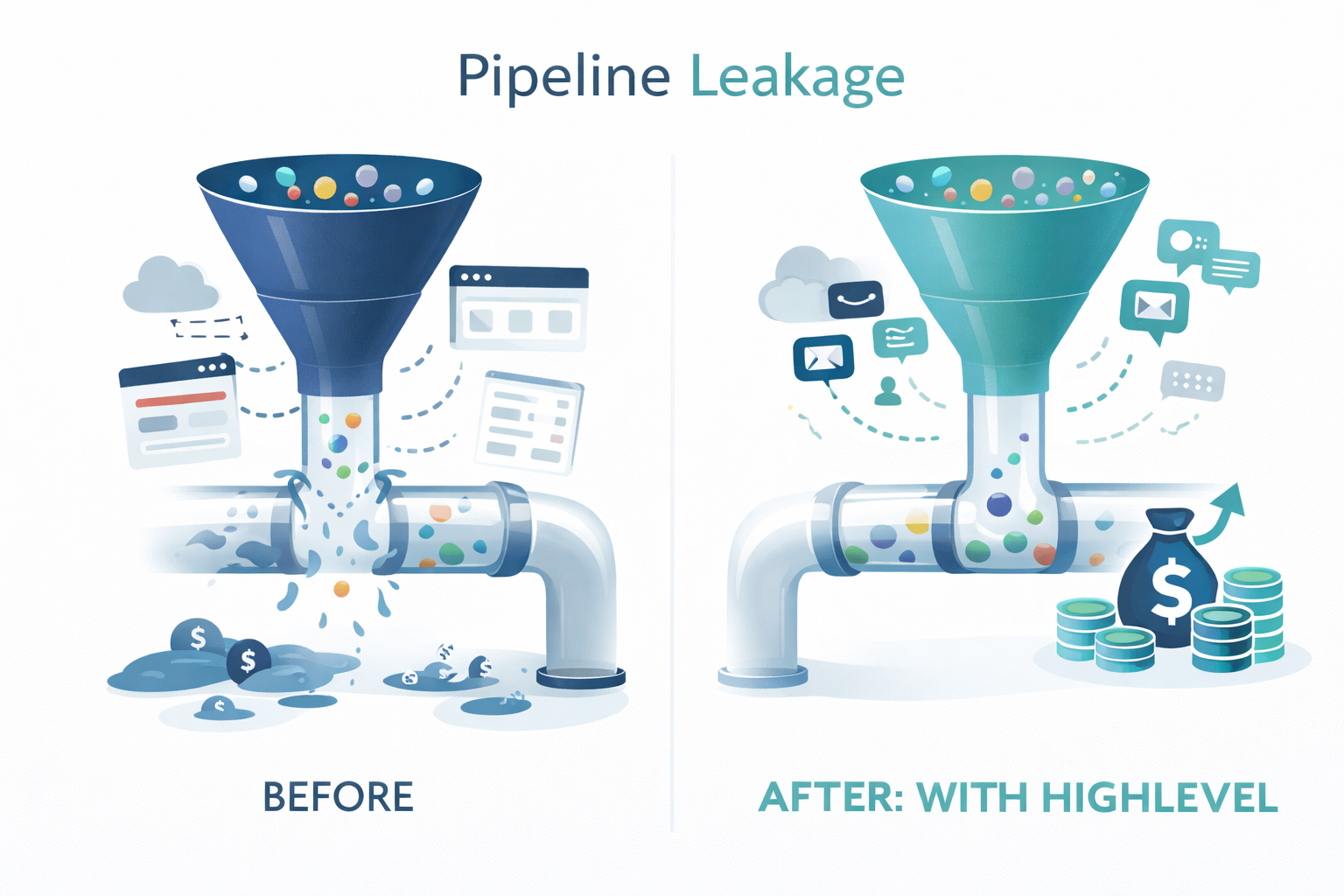
What starts as one tool becomes a CRM, an email platform, a funnel builder, an SMS tool, a scheduling tool, and Zapier integrations. And now you’re managing 5-6 tools just to do what you thought one system would handle. And paying for all of them.
This is why finding the best CRM for small business isn’t just about features. It’s about what you don’t have to bolt on afterward. If you want to see exactly how a consolidated marketing automation system works in practice, that breakdown covers the full picture.
Why HighLevel is the best CRM for most small businesses
This is where things shift. HighLevel isn’t just a CRM. It’s closer to a revenue operating system. You can see a full breakdown of what the platform includes on the Marketing System Software page.
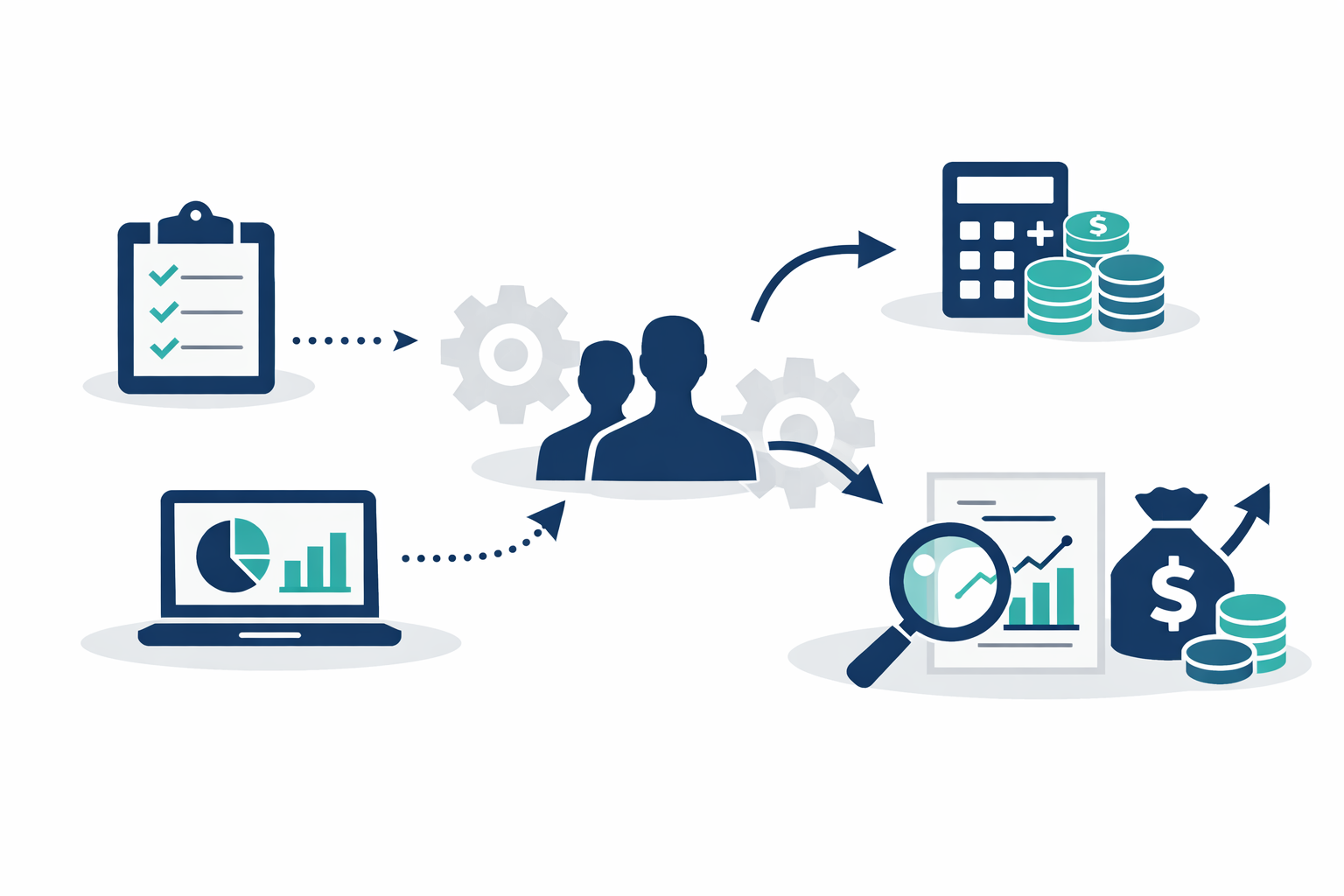
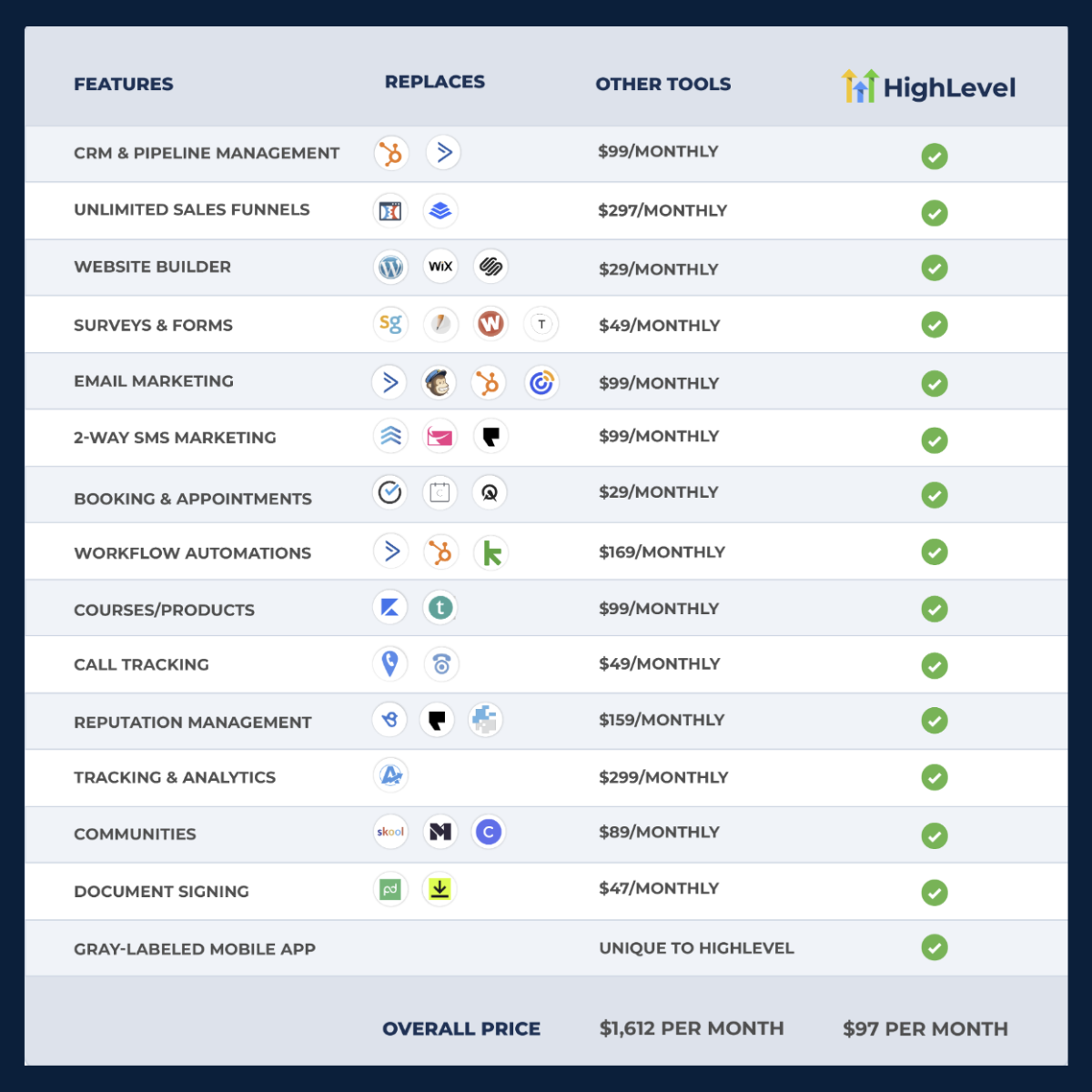
It combines CRM pipelines, marketing automation, email and SMS campaigns, funnels and landing pages, forms and surveys, booking calendars, call tracking, workflow automation, and chat, all in one place.
But honestly, the feature list isn’t the interesting part. The operational side is.
It reduces enablement cost
HighLevel has one of the simplest automation builders I’ve used. You can build lead follow-ups, nurture sequences, pipeline automations, and multi-channel messaging, without needing a consultant. If you’re also thinking about who runs the execution side, learn more about building an offshore marketing team to keep costs lean. That alone changes the math for small businesses.
It simplifies your system
Instead of stitching tools together, you just build inside one platform. Less integration. Less breakage. Less overhead.
The pricing actually makes sense
In my experience, most small business stacks end up around $1k–$3k/month. HighLevel starts at $97/month, and you’re not paying more for contacts, users, or basic functionality. That gap matters. Because every dollar you don’t spend on software can go toward generating pipeline.

Do you need everything it offers?
No. Most small businesses don’t. You usually start with pipeline tracking, lead capture, automated follow-up, calendar booking, and email and SMS. That’s enough to build momentum.
The difference is that you don’t have to switch systems later when you grow. And if you’ve ever migrated CRMs, you know that’s not something you want to do twice.
Final take: the best CRM for small business
The best CRM for small business isn’t the one with the most features. It’s the one that keeps your system simple, keeps your costs controlled, and actually helps you generate pipeline.
For most small B2B companies, HighLevel has the best capability-to-cost ratio I’ve seen. Not because it’s perfect. But because it solves the real problem most businesses are dealing with.
FAQ
What is the best CRM for small business?
For most small businesses, an all-in-one platform like HighLevel offers the best balance of cost, automation, and system simplicity.
What is the best CRM for small B2B companies?
For small B2B companies specifically, HighLevel stands out for its pipeline management, automation, and all-in-one approach that eliminates the need for a complex tool stack.
Is HubSpot worth it for small businesses?
It can be, but costs often scale quickly once you need advanced features and support.
What CRM is easiest to use for small teams?
Platforms with built-in automation and fewer dependencies tend to be easier to manage long term.
Do small businesses need an all-in-one CRM?
Not always. But fragmented stacks often become more expensive and complex over time.
What is the cheapest CRM with automation?
Some tools are cheaper upfront, but total cost of ownership depends on how many additional tools you need to add.
If you’re evaluating CRMs right now
Try it. Not in theory. Not from a feature list. Actually run your pipeline through it for a week. Build a workflow. Capture a lead. Send a follow-up. Book a call.
You’ll feel the difference pretty quickly. And if you want a structured way to build your full marketing system around it, the 6-Week B2B Growth Sprint is a free framework that walks you through exactly that.