


A marketing plan in 2026 shouldn’t be a document that lives in a folder somewhere.
It should be a system.
When you strip away the fluff, a marketing plan that actually works has seven parts, in this order:
- A clear goal or goals tied to revenue and business objectives
- A defined buyer or ideal customer profile
- An irresistible offer and message
- Primary channels to consistently capture leads
- A system to nurture and convert those leads
- A flywheel that turns customers into growth
- A way to track, measure, and adjust without chaos
Miss one, and the plan breaks.
Overcomplicate it, and it never gets used.
Let’s walk through it step by step.
Table of Contents
- Why Most Marketing Plans Don’t Work
- Step 1: Set a Clear Goal Tied to Business Objectives
- Step 2: Define Who You’re Targeting.
- Step 3: Create an Offer and Message They Can’t Ignore
- Step 4: Choose Your Primary Channels to Capture Leads
- Step 5: Build a Simple Nurture and Conversion System
- Step 6: Turn Customers Into a Growth Flywheel
- Step 7: Decide How You’ll Track and Measure What Matters
- Make Sure the Plan Is Financially Sound
- A Simple Marketing Plan Example
- Want Help Turning This Into a Real Plan?
Why Most Marketing Plans Don’t Work
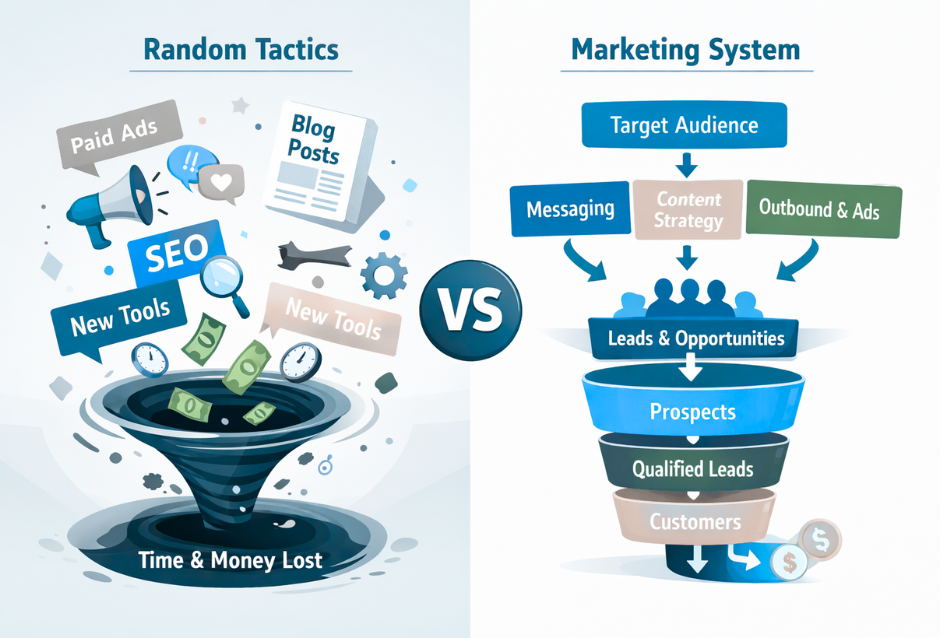
The simple reason. They start with tactics.
A new channel.
A new campaign.
A new idea someone saw online.
What they don’t start with is a decision.
So months later, the team is busy, the budget is gone, and no one can clearly say whether marketing helped the business at all.
A real marketing plan doesn’t describe everything you could do.
It tells you what matters, what doesn’t, and what to stop doing.
That’s what we’re building here.
Step 1: Set a Clear Goal Tied to Business Objectives
Every marketing plan needs a goal.
If this step is fuzzy, everything downstream gets fuzzy too. Channels scatter. Messaging weakens. Measurement turns into vibes.
A real marketing goal answers one question:
What does the business need marketing to do right now?
Not eventually.
Not in a perfect world.
Right now.
What most teams do instead…
They write goals like:
- Grow brand awareness
- Increase leads
- Scale revenue
These aren’t goals. They’re aspirations.
They don’t guide tradeoffs and they don’t protect focus.
What to decide first.
Most B2B companies are solving one primary problem at a time:
- We need pipeline in the next 30 to 90 days
- We need demand and credibility so deals stop stalling
- We need better retention, expansion, or referrals
- We need to educate the market because buyers don’t get it yet
Pick one.Then make it specific enough to guide decisions.
Bad goal
“Grow pipeline.”
Better goal
“Generate 25 qualified sales conversations per month from mid-market manufacturing companies within 90 days.”
That single sentence will shape everything else in the plan.

Step 2: Define Who You’re Targeting.
Once the goal is clear, the next question is obvious.
Who is this for?
Not everyone.
Not your future dream customer.
Not a bloated persona doc.
Your marketing plan should be built around the buyers most likely to help you hit the goal you just set.
Start with reality, not aspiration
The fastest way to get this wrong is to define your audience based on who you want to serve instead of who actually buys.
Look at your last 12 months of customers and ask.
- Which industries show up repeatedly?
- Which buyers close faster?
- Which customers are profitable and low friction?
Those patterns matter more than job titles.
Write a one-line target definition
Before moving on, you should be able to say:
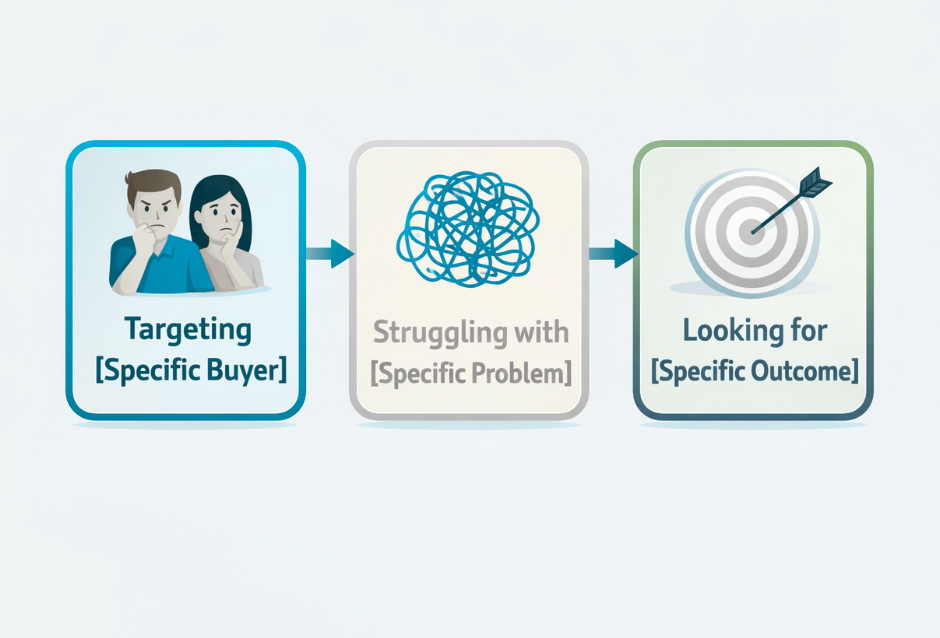
We are targeting [specific buyer] who are struggling with [specific problem] and actively looking for [specific outcome].
If that sentence feels fuzzy, stop and tighten it. Everything else depends on this.
Step 3: Create an Offer and Message They Can’t Ignore
Once you know who you’re targeting, you need an offer strong enough to earn attention.
This is where most plans quietly fail.
They describe what the company does.
They list features.
They talk about benefits in broad terms.
That’s not an offer.
What makes an offer irresistible
A strong offer does three things:
- Solves a real, urgent problem
- Promises a clear outcome
- Reduces perceived risk
Your buyer should instantly understand what this is, who it’s for, and why it matters.
Keep the message simple on purpose.
If a 10-year-old couldn’t repeat what you do after hearing it once, it’s not clear yet.
A simple structure that works:
We help [specific buyer] achieve [specific result] without [specific pain or risk].
This isn’t copy polish. It’s clarity.
Lock this before choosing channels. Otherwise, you’ll just amplify noise.
Step 4: Choose Your Primary Channels to Capture Leads
Now we talk about channels.
Not all of them.
Just the ones that matter.
A strong marketing plan defines primary channels, based on team size and capacity.
Think in terms of primary engines.
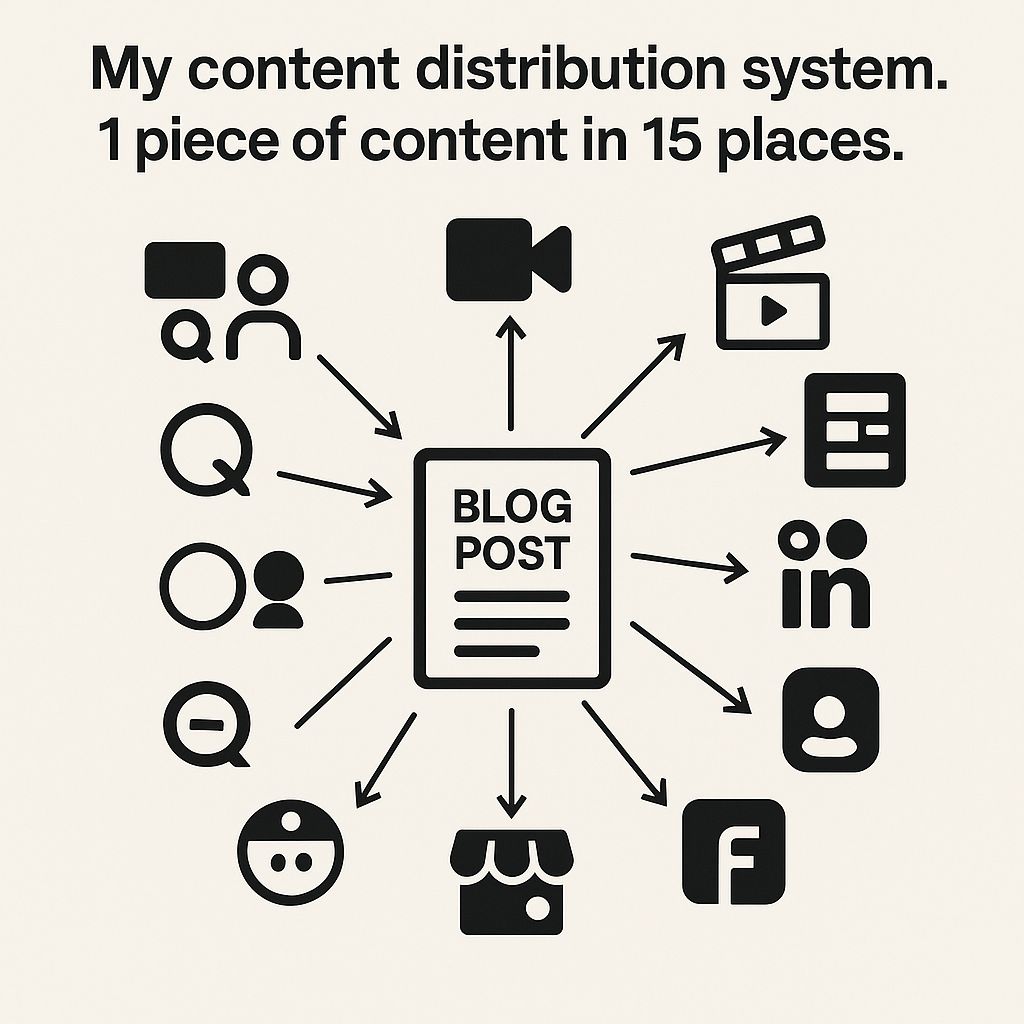
You can use multiple channels, but they should roll up into one or two primary engines.
For example:
- YouTube as the primary channel
- Clips repurposed to LinkedIn
- Long-form content turned into blog posts
- A newsletter driving nurture
That’s not four strategies. It’s one system.
Match channels to buyers and consistency
Ask two questions:
- Where does this buyer already spend attention?
- Can we show up here consistently every week?
If the answer to either is no, it’s not a primary channel.
Consistency beats novelty every time.
Step 5: Build a Simple Nurture and Conversion System
Most people aren’t ready to buy the first time they hear about you.
If your plan doesn’t account for that, you’ll leak opportunities.
Nurture is not optional.
Nurture is how you stay relevant while buyers decide.
This usually includes:
- Email follow-ups
- A newsletter
- Retargeting ads
- Sales sequences
- Proof content that reinforces trust
The exact mix matters less than having a system that runs without manual chasing.
Use one system as the source of truth.
This is where most teams lose deals.
Leads live in one tool.
Follow-ups happen in another.
No one trusts the numbers.
For lean teams, this is why I recommend using a single CRM system like GoHighLevel to handle:
- Lead capture
- Tagging and segmentation
- Automated follow-ups
- Pipeline tracking
You don’t need a lot of tools. You need fewer tools that actually work together.
Step 6: Turn Customers Into a Growth Flywheel
A complete marketing plan doesn’t stop at the sale.
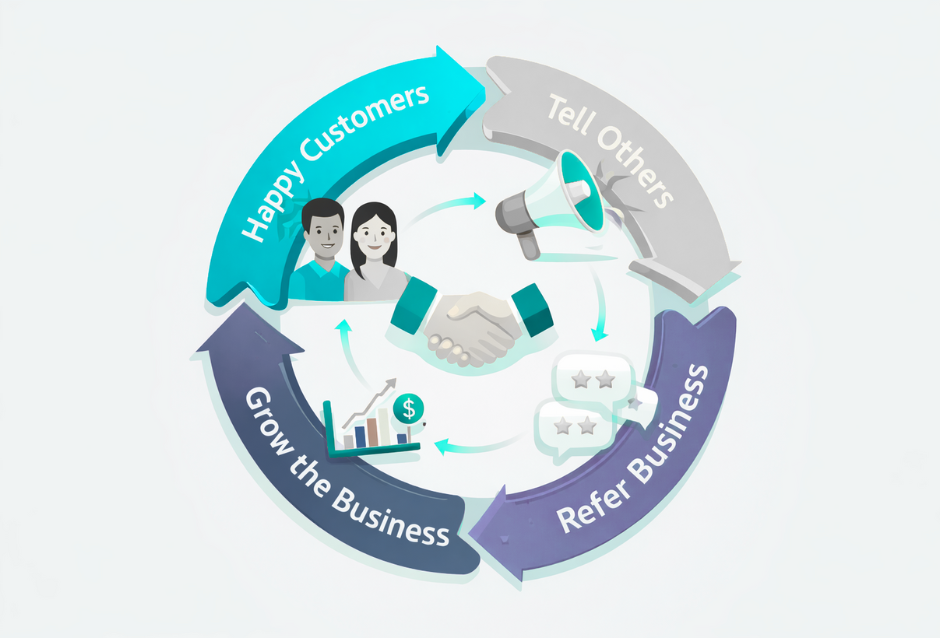
Your happiest customers are one of your most powerful growth channels, but only if you treat them like one.
Referrals should be marketed like any other channel.
Referrals don’t happen by accident.
They need:
- A clear ask
- A simple system
- Consistent timing
- Follow-up
If referrals matter, they belong in the plan with an owner, a process, and a metric.
The same goes for expansion and renewals.
Build momentum after the win.
Right after a customer sees success is the best time to:
- Ask for feedback
- Capture testimonials
- Introduce the next offer
- Invite referrals
That’s how growth compounds instead of resetting every quarter.
Step 7: Decide How You’ll Track and Measure What Matters
If your marketing plan doesn’t include how you’ll measure success, it’s not a plan.
It’s a hope.
But tracking everything is just as dangerous as tracking nothing.
Start with the goal
Your goal determines what matters.
If the goal is retention, new leads are a distraction.
If the goal is pipeline, impressions don’t matter.
If the goal is demand, demo bookings alone don’t tell the story.
Ask this instead:
What behavior must change if this plan is working?
That answer becomes your north star.
Pick 3 to 5 metrics. No more.
Good plans track:
- Activity
- Quality
- Outcome
Examples:
Pipeline-focused plan
- Conversion rate by stage
- Sales qualified leads
- Meetings booked
- Cost per opportunity
Demand-focused plan
- Email list growth
- Assisted pipeline
- Demo page conversion
Retention and expansion
- Renewal rate
- Expansion revenue
- Referrals generated
If a metric doesn’t help you decide what to do next, it doesn’t belong in the plan.
Set a simple review cadence
Tracking only matters if it leads to decisions.
A rhythm that works:
- Weekly, review numbers and fix small leaks
- Monthly, decide what to double down on or stop
- Quarterly, adjust the plan based on reality
A plan that isn’t reviewed regularly stops being real.
Make Sure the Plan Is Financially Sound
Before you finalize the plan, run one last reality check.
Does this make financial sense?
You should know:
- What a customer is worth over time?
- What you can afford to spend to acquire one?
- How long it takes to earn that back?
This protects you from overspending, killing good strategies too early, or chasing volume instead of profit.
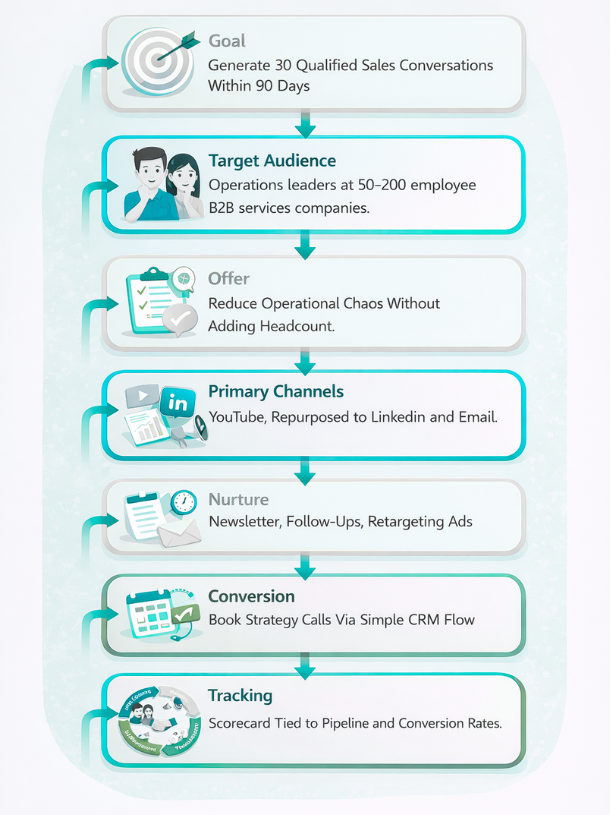
A Simple Marketing Plan Example
Here’s what this looks like in practice.
Goal
Generate 30 qualified sales conversations per month within 90 days.
Who
Operations leaders at 50–200 employee B2B services companies.
Offer
A clear promise to reduce operational chaos without adding headcount.
Primary channels
YouTube as the main engine, repurposed to LinkedIn and email.
Nurture
Weekly newsletter, automated follow-ups, retargeting ads.
Conversion
Book a strategy call through a simple CRM flow.
Flywheel
Post-project reviews, referral asks, and expansion offers.
Tracking
Weekly scorecard tied to pipeline and conversion rates.
That’s a real plan. Not complicated. Just intentional.
Want Help Turning This Into a Real Plan?
Reading about a marketing plan is easy.
Actually building one, with clarity and follow-through, is where most teams get stuck.
That’s why I created the Free 6-Week Growth Sprint.
Each week, we take one part of this system and make it real:
- Your goal and message
- Your best channels
- Your nurture and conversion flow
- Your CRM and tracking
- Your outbound and referral engines
- And a plan that scales without chaos
No fluff. No theory dumps. Just practical work you can apply immediately.
👉 Get access to the Free 6-Week Growth Sprint here.
If you want a marketing plan that actually runs, this is where to start.